

Every builder’s first duty is philosophical: to decide what they should build for. This series asks 9 questions to founders who are building towards their vision of the human good.
Today’s guest is Zena Hitz. Zena is the founder of Catherine Project, which builds communities of learning through online courses and reading groups.
Zena is also a Tutor at St. John’s College and the author of Lost in Thought: The Hidden Pleasures of an Intellectual Life.
1. What are the core questions or beliefs driving your work?
I founded Catherine Project because I had the sentimental idea that learning and thinking for its own sake is a basic human need. Since I've founded it, and we've seen thousands of people come to us, I believe it is actually true. Our educational institutions have largely forgotten this fact, if they ever knew it.
The other reason I wanted the Project to be open to anyone who was interested was to see for myself how much interest there really is. My conclusion: there's a lot. I decided not to charge tuition, because learning only happens when the learner decides to do it. It can’t be bought, even if some opportunities for it can be. If we charged tuition, they’d expect us to do their learning for them.
2. What future are you building for?
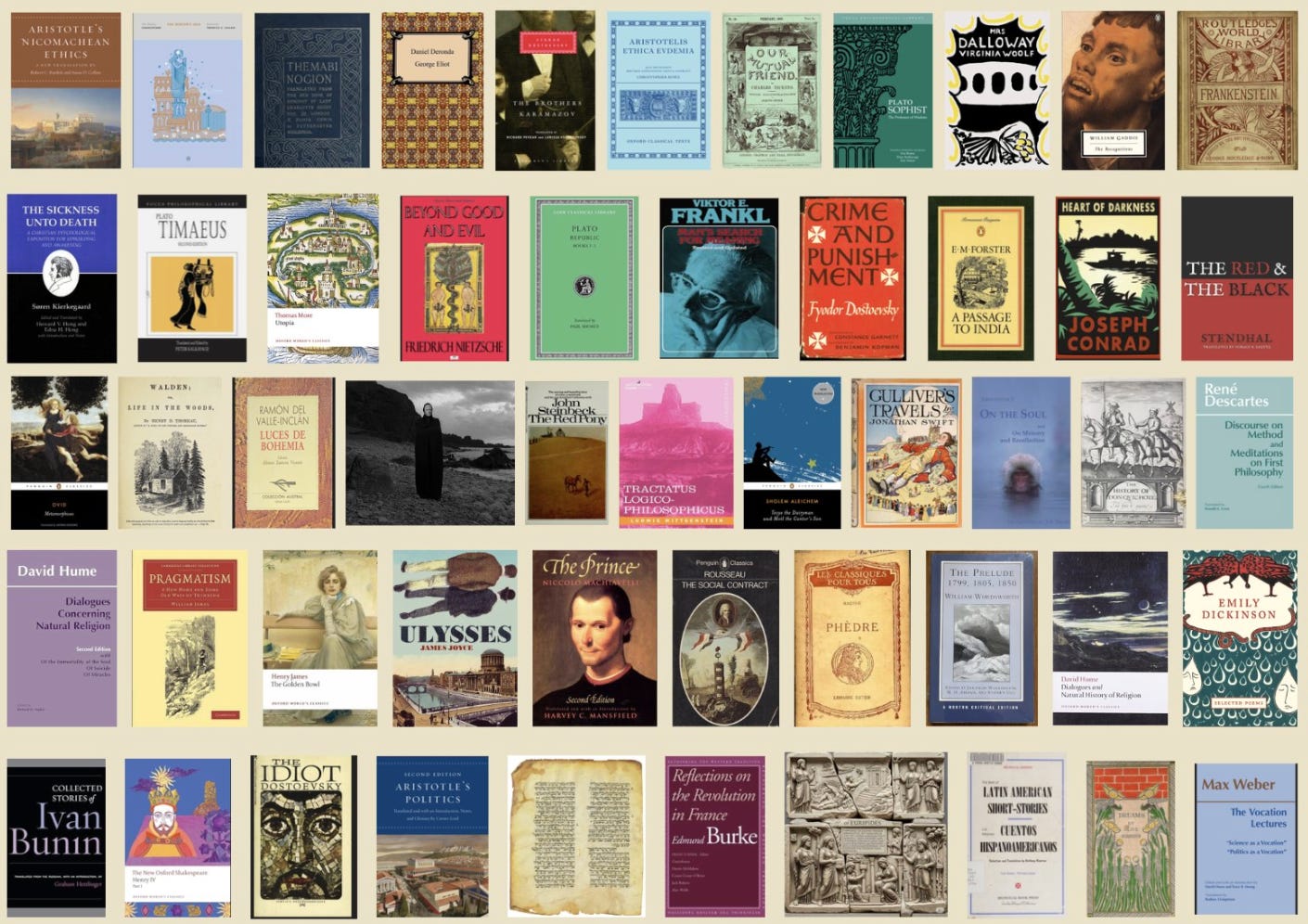
I can see two futures. In one, colleges and universities lose their last remnants of serious learning, and organizations like Catherine Project keep practices of serious learning alive for future generations.
In another future, organizations like mine display the enormous demand for liberal education that all of the educational leaders have been denying. That drives the old institutions to measures of reform and so colleges and universities return (or partially return) to their original mission.
3. What commonly held belief in the tech community do you believe is wrong?
Everyone seems to want “scale” and “impact” and seems to think that means having a massive operation. But doing something right on a small scale breeds imitators—it is like a seed. Great Books institutions were always small, but they have been enormously influential. There’s nothing more “scalable” than wheat or bread, but no one owns all the wheat nor the bread-making recipes. It doesn’t take much thinking to see that this is for the best.
Technology only works for human flourishing if we choose to design it and to use it that way. We need to think about how we want to live—in common as well as individually—and choose accordingly. Likewise, money isn’t the most important thing. To build trust, you need to care about something that recognizably benefits more than just you and your friends.
“Doing something right on a small scale breeds imitators—it is like a seed”
4. What are your main philosophical influences?
For me the biggest puzzle is how intellectual excellence can and should shape our everyday choices and our public or communal projects.
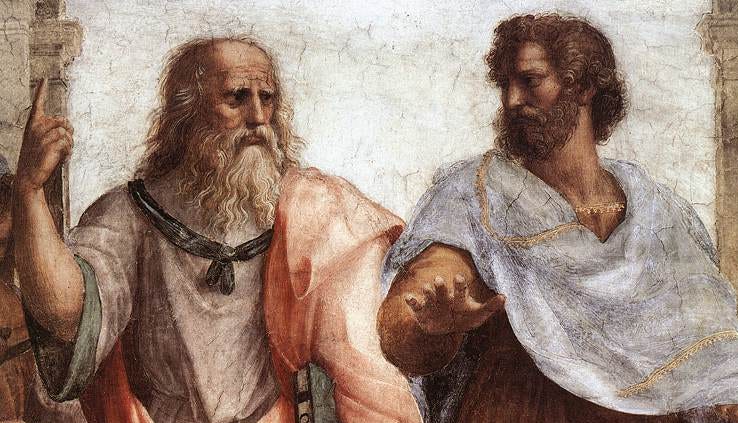
Plato and Aristotle argued eudaimonia or human flourishing was constituted by the pursuit of theoretical philosophy. Moreover, they thought the wholehearted pursuit of theory, paradoxically, was the best guide to life. In part that's because eudaimonia is always the best guide to life. Mixed motives are not stable, and tend toward the dominance of the strongest and worst motive in the mix. There's only one pursuit that matters most to us. Since that motive shapes everything else, there's nothing more important than getting it right.
5. What does human flourishing mean to you?
It means the exercise of our best capacities, the power to think and the power to love. We develop those capacities by cultivating the virtues like courage, generosity, prudence, moderation, wisdom.
We need communities on our scale—think large families or small towns—to provide training courses in virtue and meaningful paths of exercise for our activities. Poor and humble people often flourish more fully than the rich and powerful because they rely more heavily on their communities and live more intimately with them. That’s where the best of life is. I came to see this from joining the Roman Catholic Church but I think the other major religions teach it. I’m not sure anyone else does.
6. What’s one book you’ve read recently that you’d recommend?
I’m not alone in thinking the Robert Caro biographies of Lyndon Johnson are incredible.
They display perfectly the tensions between character and ambition. Caro is never glib and he never takes an easy answer.

7. What’s your most irrational belief?
That I—my will and my talents—am the chief cause of my success. In fact it was mostly luck, grace, and animal spirits. Relatedly, I have the repeated delusion that whatever the problem is, I am the person best equipped to solve it. No matter how many times I see that proved false, the unsinkable belief always rises again and plagues me when I need it least.
8. What’s the most interesting tab you have open right now?
I have a tab listing the famous social science studies that have not been replicated. We swim in fake science, so much that we can’t even make a simple argument without appealing to it. We so sorely need the arts of study, listening, reading, thinking, and judgment. “Studies show...” cannot replace a solid, well-informed human judgment.
9. Who is one writer or thinker today who you think is underrated?
Well, to add a spin on the question…we are living, active beings who can feed our reflection and imagination on anything that has been thought or said.
And so I think the most underrated thinker is whatever great thinker of the past you haven’t read yet—or wherever your understanding is most limited.
For me, it's the Enlightenment authors I know least. I have been gradually untangling Descartes' philosophy and science through my teaching at St. John's and I find it very exciting.

Thanks to Zena for answering “What Will You Build For?”
To get in touch, find her on X or at Catherine Project.
This is the third installment in this interview series, see our first interview with AI Underwriting Company co-founder Rune Kvist and our second interview with ex/ante founder Zoe Weinberg.
Cosmos Institute is the Academy for Philosopher-Builders, technologists building AI for human flourishing. We run fellowships, fund prototypes, and host seminars with institutions like Oxford, Aspen Institute, and Liberty Fund.
If you’re someone who thinks deeply, builds deliberately, and cares about the future AI is shaping: join the Cosmos network.
To nominate someone for “What Will You Build For?” leave a comment below, or send us a DM.
This resonates deeply, especially the claim that learning cannot be bought, only chosen, and that small, serious communities are the real carriers of intellectual life.
What I find myself wondering is whether we are now missing an interface-level account of this insight. If learning depends on voluntary attention, judgment, and community-scale trust, then the digital environments where learning increasingly happens are no longer neutral.
Institutions failed in part because incentives and interfaces drifted away from those human goods. The open question now seems to be: what kinds of digital interfaces preserve learning-for-its-own-sake rather than quietly dissolving it into engagement metrics?
It feels like the next frontier for philosopher-builders.