


We believe AI is a philosophical event of the same order as Copernicus and Darwin, or the American and French revolutions: it forces us to interrogate our deepest assumptions about what it means to be human, and whom or what to trust, and it gives us new tools for thinking through both.
The first is the question of what makes a human life worth living, and how we set the conditions for people to discover answers to that question for themselves. Philosophers have answered in terms of reason, virtue, the soul, love, work, and language. Much of that tradition was built on the assumption that we were the only creatures capable of any of these – that assumption is now under strain.
The second is the question of how we come to know anything we haven’t worked out for ourselves. Whose testimony do we accept, and on what grounds? Most of what any of us think we know about the world we have to take on trust from someone else. That could be a teacher, a textbook, a newspaper, or someone we know. AI is rapidly becoming one of those sources, and for many people the default one.
This summer, we’ll be in Aspen, Colorado, convening two multi-day seminars, which will cover these questions in depth. We’re making spaces available to the winners of a short, reading list-themed contest.
Seminar #1: What does it mean to be human now?
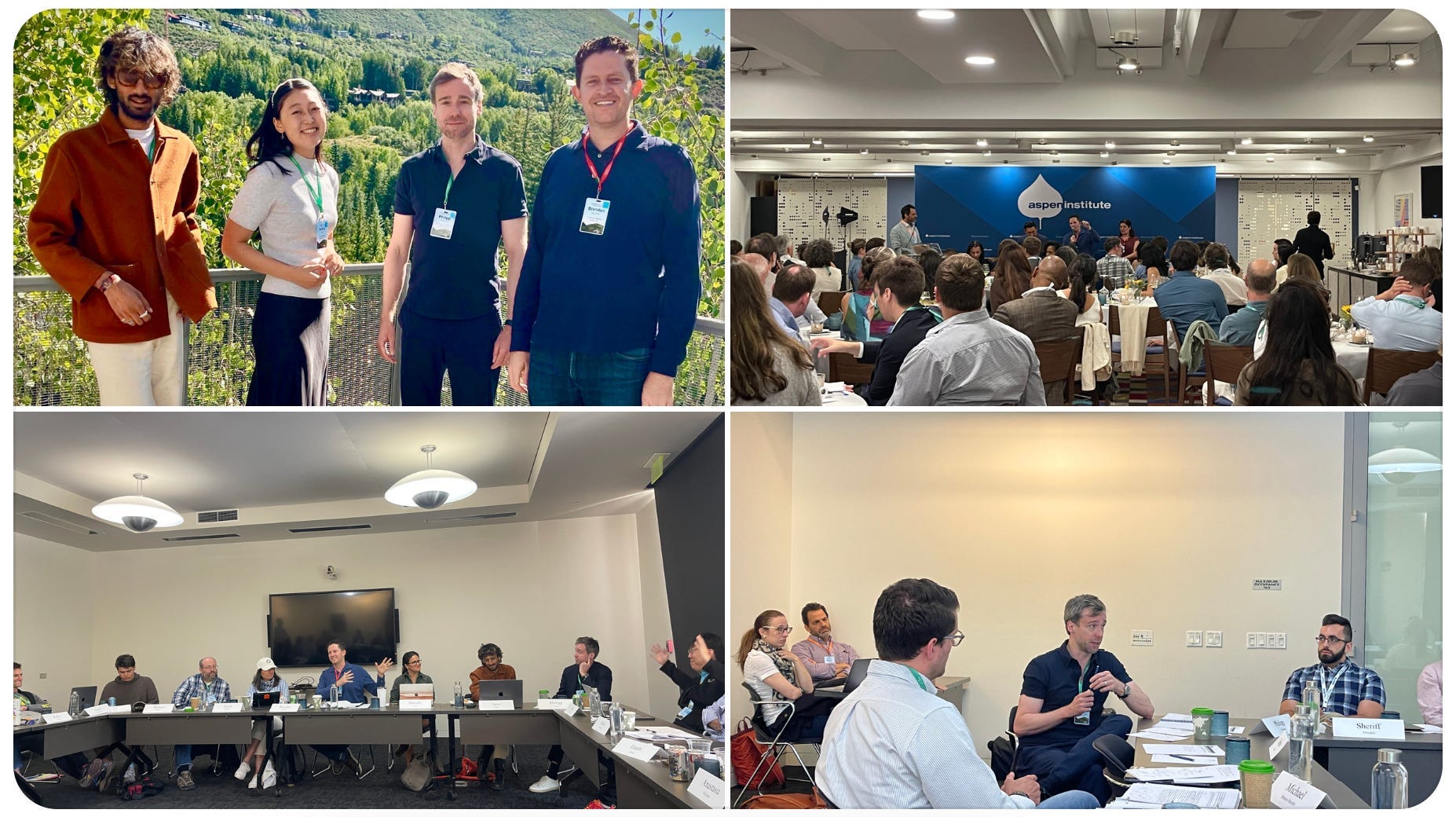
As part of the Aspen Institute’s 2026 Socrates Summer Seminar series, running from July 17th – 20th, Cosmos founder Brendan McCord will be moderating a seminar on ‘What it Means To Be Human Now.’
Brendan’s seminar will bring together 30 thinkers, policymakers, and builders in a focused discussion around a curated set of readings.
It will focus on how emerging technologies are reshaping our understanding of identity, dignity, and purpose. The discussion will cover:
What qualities define the human experience, and which of them truly matter most?
If intelligence is no longer uniquely ours, where does human value actually live – in our bodies, our relationships, our vulnerability, our faith?
Could technological progress change not just what we do, but who we become?
What do we owe future generations in preserving the conditions for a fully human life?
You can read the full description on the Socrates Seminar website.
The seminar is sold out to the public, but we are offering a fully-funded ticket and meals (normal cost $3,000), and accommodation to 1-2 competition winners.
Seminar #2: AI and epistemic authority
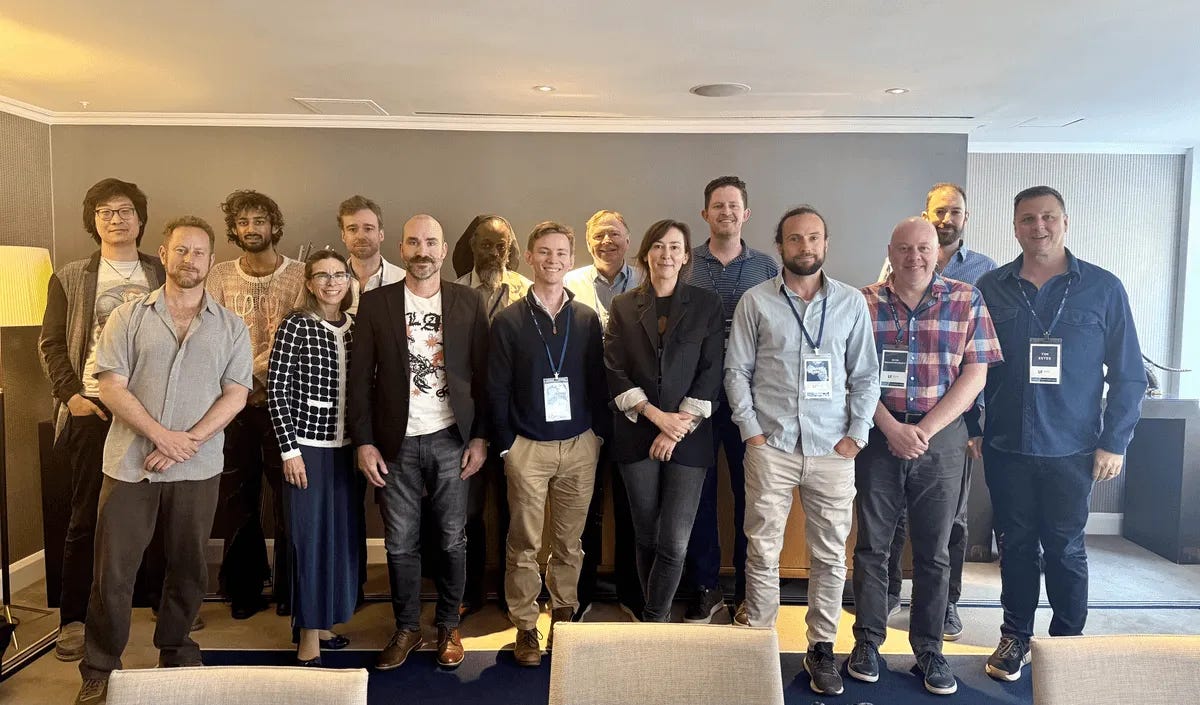
From August 1st – 3rd, we’ll be back in Colorado for our latest seminar with our friends at Liberty Fund. As with our previous seminars, we’ll be looking to convene around 15 AI researchers, scientists, and philosophers. This seminar will be focused on AI and epistemic authority.
Epistemic authority has the advantage of being a long-studied concept, with a deep literature on testimony, expertise, and deference to draw on. But it is also newly urgent. AI puts pressure on it at two levels at once:
The individual, where we defer to a model’s answer instead of working a question through ourselves
The collective, where we let these systems shape our politics.
We’ll be exploring these issues through the lens of a series of readings, spanning eras, schools of thought, and perspectives.
We’re offering up to 3 places at the seminar, where travel and lodging costs will be covered.
How to win a place
Much like our two events, our competition is based around a reading list.
To participate, you simply have to nominate a book or paper you believe is highly relevant (or underrated) for the topic of the seminar that you are applying for, and explain, in fewer than 250 words, why it would make for a good addition to the reading list for that event.
You can choose to enter for one of the events or both.
If you want to take part, please complete your entry by May 24th, 2026. Feel free to also share recommendations in the comments in addition.
Cosmos Institute is the Academy for Philosopher-Builders, technologists building AI for human flourishing. We run fellowships, fund AI prototypes, and host seminars with institutions like Oxford, St John’s College, and Liberty Fund.
Before inquiring about "what it means to be human?", consider the differences between man-kind and hu-man keeping in mind that the original (Sanskrit) meaning of "man" is "thinker" and the prefix "hu" which has definitely altering but ambiguous intended meaning (e.g. hue or the "color" of or altered man but not man, or possibly related to "humus" of or connected to the earth as in earthly but not "godly" as in "fallen"). The two, mankind and human, are not directly interchangeable.
The epistemic authority framing is the right frame. The individual level is the more tractable problem. The collective level is the one that should keep people up at night. When a shared epistemic floor degrades, not through lies but through fluency, the social cost doesn't show up in any individual exchange. It shows up in the aggregate, slowly, as the capacity to disagree productively about facts disappears. The question I keep returning to: is there a level of AI-mediated testimony at which a democracy's update mechanism fails not because anyone is deceived, but because the friction required for genuine revision has been optimized away?