


Today, we’re delighted to unveil our largest cohort of Cosmos grantees to-date, working to advance human autonomy and truth-seeking.
The projects range from wearable AI for memory and cryptographic tools for scientific collaboration to a benchmark based on pre-1940 thought on machines and autonomy.
Inspired by Cosmos Founding Fellow Tyler Cowen’s Emergent Ventures, our grants support projects that move too quickly for traditional research funders. At the same time, they don’t always fit with the priorities of for-profit labs or sit outside the dominant paradigms in fields like AI safety.
We’ve seen Cosmos grantees translate their projects into new companies as well as research featured in leading venues: Paul de Font-Reaulx recently co-founded Sophron Research, a non-profit eval organization, inspired by his grant work; Cheng-Wei Hu’s learning app Wondering recently reached number two on Product Hunt; and we’ve seen Cosmos-backed research published at ICML, COLM, and IEEE, and deployed in medical trials. You can see a list of past winners here.
We’re sharing some information about what our latest cohort is working on. The projects were selected from three tracks:
AI for Human Autonomy: projects that help people practice judgment and self-formation.
AI for Truth-Seeking: awarded in partnership with FIRE, projects that protect the open contestation of ideas and the role of human inquiry.
Philosophy x AI Seminar: pitches from attendees at the Philosophy, AI, and Innovation seminar hosted by the Laboratory for Human-Centered AI at the University of Oxford.
We’ll be announcing future opportunities to apply for grants in the coming months. If you have an idea for a project, the best way to receive updates on future grant rounds is to subscribe.
AI for Human Autonomy
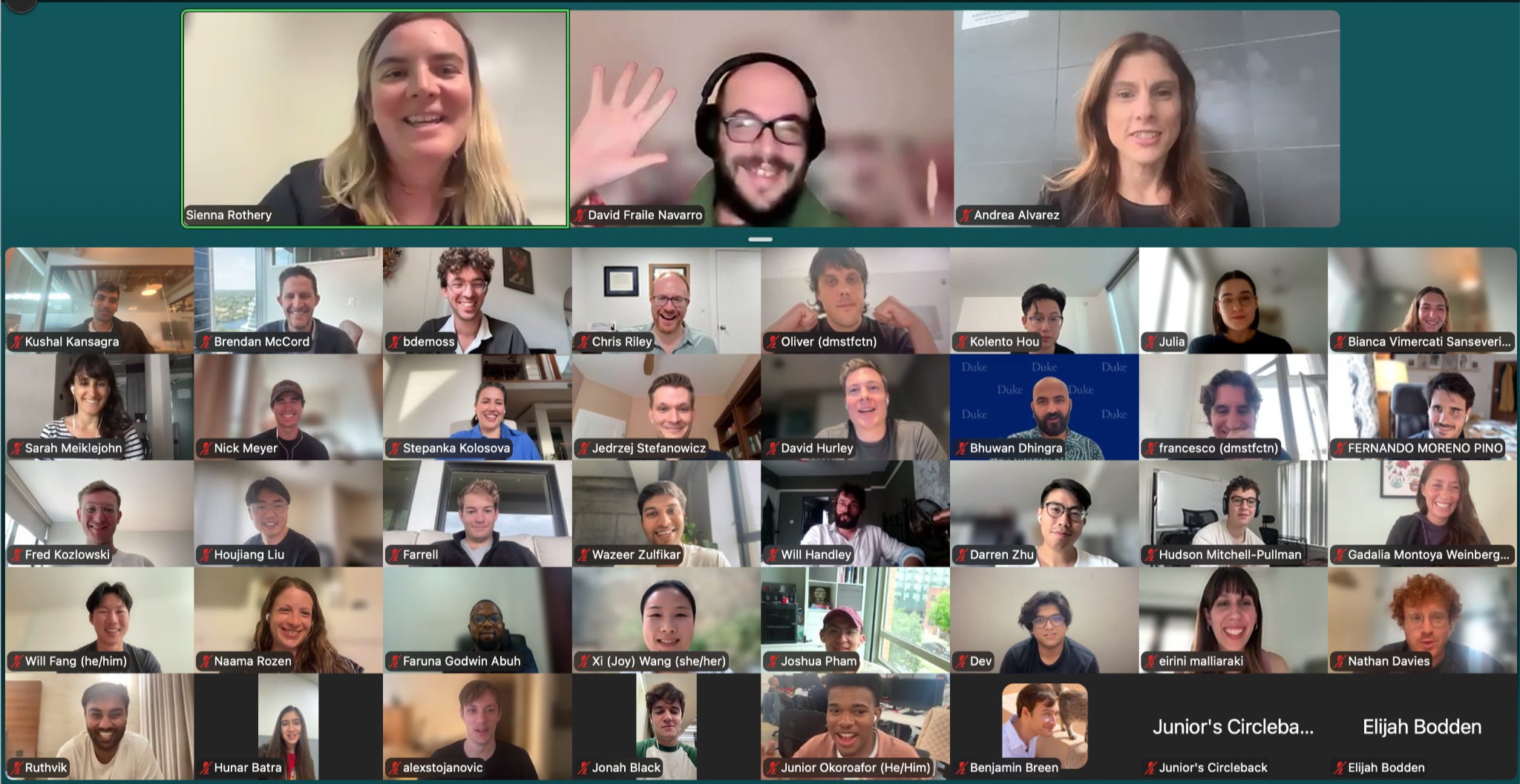
Alex Stojanovic | London, UK
Augmented Assembly: A prototype where AI delegates negotiate a real fund allocation, testing how deliberation shapes judgment.
Alicia Guo | Seattle, WA
Shared Commonplace: A shared archive where AI routes questions to friends and notes, instead of answering.
Andrea Álvarez Marín | San José, Costa Rica
Who Decides?: An index testing whether AI-assisted legislators retain independent judgment.
Bhuwan Dhingra | Durham, NC
Open Detector: An open-source detector estimating human and AI contributions to writing.
Branton DeMoss | Oxford, UK
Indie AI: Research compressing neural networks so AI can run on personal hardware.
Chris Riley | Tacoma, WA
Resilience Harness: A prototype conversation layer detecting patterns of AI sycophancy and excessive deference.
Christian DeFeo | Peterborough, UK
Against the Perfect Companion: A rubric assessing whether AI companions support or erode human autonomy.
David Fraile Navarro | Sydney, Australia
Quorum: An open-source multi-agent clinical forum for visible, contestable deliberation.
David Hurley | Toronto, Canada
Viva: A voice examiner that asks users to defend ideas against expert-written rubrics.
Dev D. Goyal | New Delhi, India
Semantic Integrity Harness: A tool checking whether AI preserves a person’s stated preferences and limits.
dmstfctn (Francesco Tacchini and Oliver Smith) | London, UK
Centaur Politics: A strategy game testing how people can contest AI-assisted lawmaking.
Eirini Malliaraki | London, UK
Tacit Knowledge Studio: A tool helping experts map, own, and share their tacit judgment.
Elijah Bodden | Cambridge, MA
Marginalia: An annotation-based AI interface that keeps idea generation with the user.
Farrell Gregory | Washington DC
AI for Higher Virtues: Research testing whether AI favors users’ stated values or their observed habits.
Fei Ma | Palo Alto, CA
Glassbox: An open-source kit for building AI with visible sources and adjustable assumptions.
Fernando Moreno-Pino | Oxford, UK
Correct Validation is Not Enough: A diagnostic for whether AI narrows the hypotheses scientists consider.
Frederick Kozlowski | New York, NY
Verification Jigs: Behavioral verification harnesses for human review of AI-written code migrations.
Gadalia O’Bryan | Centennial, CO
Human-in-the-Loop: A prototype cryptographic protocol anchoring human intent and approval in AI workflows.
Godwin Abuh Faruna | Abuja, Nigeria
Persona Collapse: An interpretability workbench visualizing how assistant personas change in long conversations.
Houjiang Liu | Austin, TX
Scaffolding Critical Engagement: An ideation plugin prompting researchers to own their critique and development of AI-assisted ideas.
Hudson Mitchell-Pullman | Blacksburg, VA
Specification Design Improvement: Research on how non-technical users write and improve AI tool specifications.
Hunar Batra | Oxford, UK
Introspective Honesty: Training reasoning models to report internal influences in causally grounded ways.
Jędrzej Stefanowicz | Warsaw, Poland
/remensio: A private AI-use journal pairing usage logs with nightly reflection on human flourishing.
Jonah Black | Chicago, IL
Wittgenstein: A tool flagging text that LLMs are likely to misread for human review.
Joshua Pham | New York, NY
Hospitality to Your Thought: A field study testing when personal AI returns people to their own questions.
Julia Gontarek and Jedrzej Duszynski | Warsaw, Poland / Oxford, UK
The Right to Change: A dashboard for viewing, editing, and verifying what AI remembers about you.
Junior Okoroafor | London, UK
Meta-Preference Alignment: A benchmark testing whether AI respects users’ higher-order preferences.
Kolento Hou | San Francisco, CA
The AI-Native ETS: An assessment measuring whether people direct AI or defer to it.
Kristine Pashin | Oxford, UK
Benchcraft: A lab notebook requiring human judgment before offering AI interpretations.
Naama Rozen | Haifa, Israel
Anchor-Preservation Auditor: An auditor flagging when AI agent chains drift from user-set priorities.
Nathan Davies and Ben Breen | Oxford, UK / Santa Cruz, CA
Humanity’s First Exam: A benchmark using pre-1940 thought on machines and autonomy to test AI models.
Nick Meyer | New York, NY
Alienation of Will: An open tool that tests how well AI agents distinguish value-laden decisions from operational ones, and whether they’re tracking this difference or imitating it.
Ruthvik Peddawandla | London, UK
Pond: A research tool for revisiting personal archives and sustaining long-term inquiry.
Sarah Meiklejohn | London, UK
PAUSE: A reflective chatbot that resists final verdicts on difficult questions.
Sonnet Xu | Stanford, CA
Preference-First Medical AI: A medical AI prototype that elicits patient values before recommending treatments.
Stepanka Kolosova | Prague, Czechia
Silver: A wearable and open-source protocol letting people govern AI interruptions.
Wazeer Zulfikar | Cambridge, MA
Memory Anchors: A wearable AI prototype to help elderly adults remember social interactions.
Will Handley | Cambridge, UK
Instrumenting the Unrecorded Half of Science: An open-source ambient instrument for capturing spoken reasoning in scientific labs.
William Fang | Stanford, CA
Hold Me To It: User-authored guardrails keeping students’ AI use aligned with their goals.
Xi Wang | Cambridge, UK
SecondThought: Collaborative writing tools that flag claims for constructive human questioning.
AI x Truth-Seeking winners
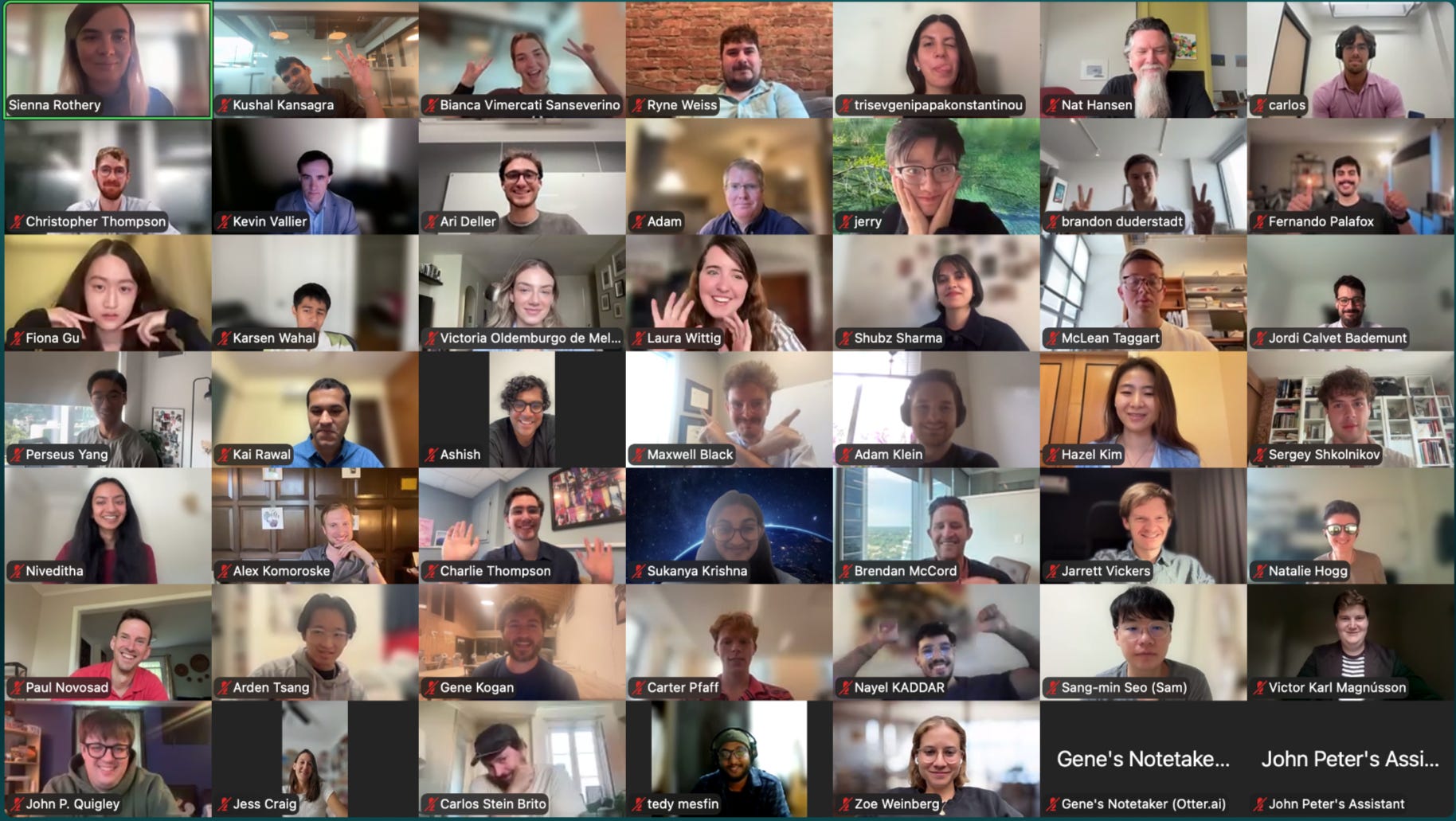
Ari Deller | Cambridge, UK
(Human)RationalityBench: A benchmark measuring whether AI strengthens or degrades human belief formation.
Adam Gjesdal | Yorba Linda, CA
Interlocutor: Conversational AI that steelmans opposing views and audits its own bias.
Arden Tsang | London, UK
Grounded Verification Benchmark: A benchmark testing whether AI scientists verify claims with inspectable code.
Arjun Raj | Philadelphia, PA
Steering Agentic Science with Claimgraphs: Claim graphs mapping contested evidence to guide autonomous science.
Ashish Uppala | New York, NY
Anagram: A protocol for researchers to timestamp their findings and claims without revealing it to others, while still enabling secure collaborator discovery across private data.
Brandon Duderstadt | New York, NY
Language Diffusion: A language model tracing how beliefs and phrasing spread online.
Carlos Guerrero Alvarez & Goutham Nalagatla | Hanover, NH
Multi-turn Drift: An evaluation tracing how multi-turn conversations can lead models to scheme.
Carlos Stein Brito | Lisbon, Portugal
Confabulation Detector: A probe flagging which parts of an AI answer are grounded or confabulated.
Carter Pfaff | Brooklyn, NY
Virtue Games: Adversarial games for surfacing and steering honest dispositions in AI models.
Charlie Thompson | San Francisco, CA
Context Engine: Group deliberation testing whether AI agents faithfully represent their human principals.
Christopher Thompson | London, UK
LLM Misinformation Cascades: Research testing whether corrective agents can stop misinformation cascades.
Fernando Palafox | Austin, TX
Training LLMs for Human Insight: Training LLMs to reward improvements in users’ understanding of complex systems.
Gene Kogan | Bombay Beach, CA / Princeton, NJ
Community Guardian Angel: A prototype framework for community-owned AI built from shared memory and mission.
Jarrett Vickers | Dothan, AL
Compression Integrity Bench: A benchmark testing whether model compression erodes epistemic integrity.
Jessica Craig | Jacksonville, NC
OpenEvidence: A browser extension surfacing sources, competing evidence, and uncertainty.
John Peter Quigley | Kingston, NY
Legislative AI Network: A nonpartisan legislative assistant grounded in cited public records.
Jordi Calvet-Bademunt | Washington, DC
Free Speech Ledger: A signed ledger tracking how AI models treat lawful, contested speech.
Karsen Wahal | San Francisco, CA
Wikipedia Displacement: A public index measuring how AI exposure affects Wikipedia knowledge production.
Kevin Vallier | Toledo, OH
Constitutions for Truth-Seeking AI Collectives: Experiments testing how social structures shape collective AI intelligence.
Maxwell Black | Minneapolis, MN
MirrorLake-Bench: A benchmark testing whether AI agents’ invented episodes share recurring relational patterns.
Mingjun (Jerry) Zhang | Oxford, UK
Beyond Pass or Fail: Training LLMs to report confidence calibrated to required decision thresholds.
Nat Hansen & Angel Pinillos | San Francisco, CA
Synthetic Networked Research Institutes: Simulated AI research communities testing how structure shapes discovery.
Natalie Hogg | Cambridge, UK
Looks Like Montaigne: An open-weight model fine-tuned on self-questioning, deliberately inconclusive prose.
Nijat Hasanli | London, UK
Provenance Penalty: Experiments measuring how perceived AI authorship distorts quality judgments.
Niveditha Iyer & Adam Klein | New York, NY
Always Learning: A model and training process for updating predictions and beliefs in response to new evidence.
Paul Novosad | Hanover, NH
Open Scientific Papers: A demonstration of scientific papers as an interactive, AI-era website.
Sangmin Seo | Busan, South Korea
rag-support-forecast: A pipeline testing whether retrieved evidence genuinely improves AI forecasts.
Sergey Shkolnikov | Oxford, UK / Berlin, Germany / Mountain View, CA
Sextant: A tool mapping whether claims are corroborated, contested, or singly sourced.
Shubz Sharma | London, UK
DissentCheck: A toolkit and experimental framework for studying and testing consensus dynamics in AI committees.
Sukanya Krishna | Cambridge, MA
Early Detection of Emergent Collective Behaviour: A toolkit detecting and testing emergent coordination among AI agents.
Tewodros Berhanu | Ethiopia
Anti Lethe Machine: A verifiable ledger tracking how AI answers change over time.
Trisevgeni Papakonstantinou | London, UK
Adaptive Epistemic Intervention Engine: A research prototype matching belief-lock-in interventions to users’ cognitive styles.
Victoria Oldemburgo de Mello | Toronto, Canada
Measuring AI Information Echo-Chambers: An audit measuring how user cues shape which facts LLMs surface.
Oxford Philosophy x AI
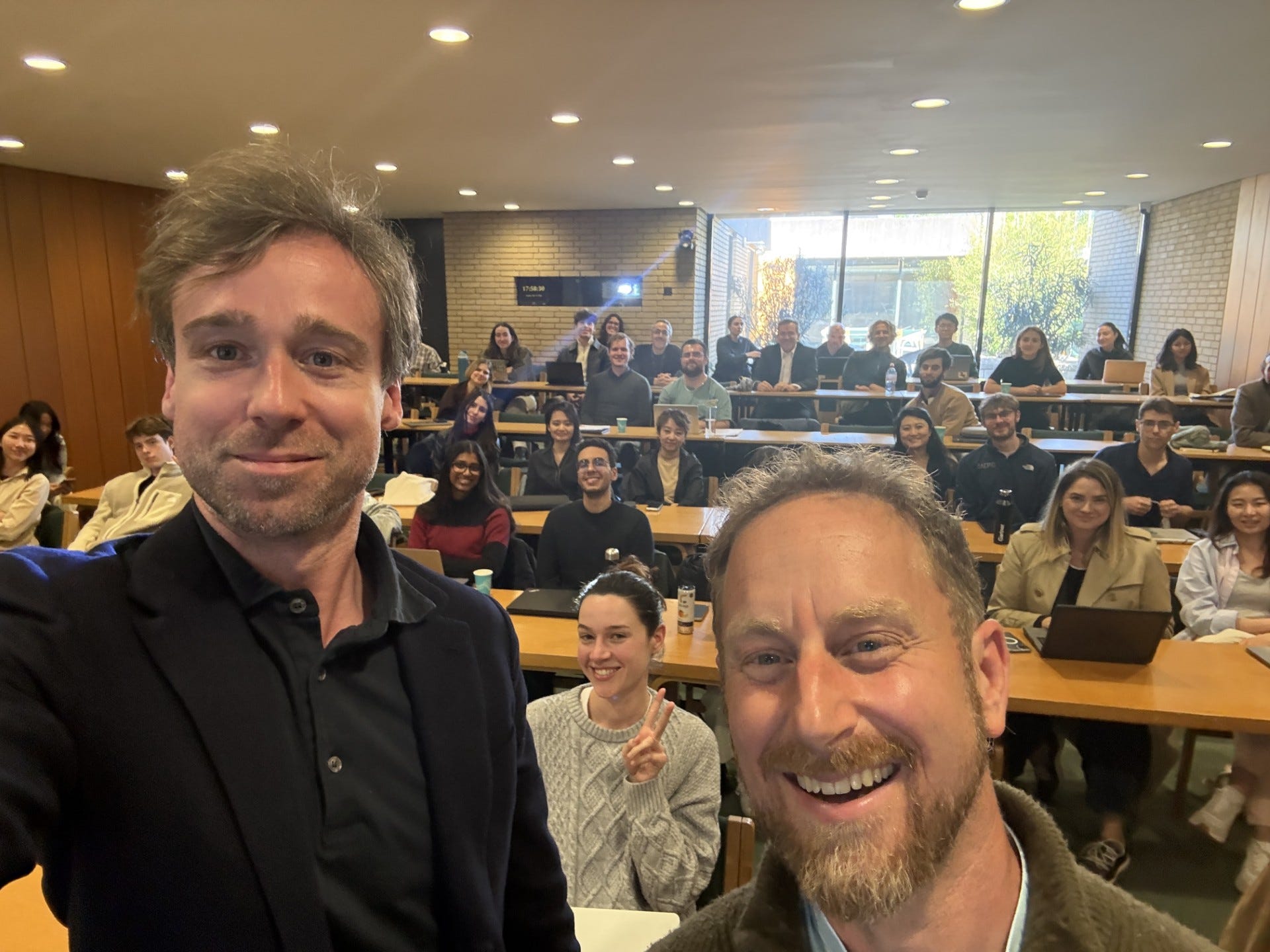
Fiona Gu | Shanghai, China / Oxford, UK
The Hack Method: A pilot test on the effects of training users’ abilities to stress-test AI reasoning.
Hazel Kim | Oxford, UK
Moral Monocultures: An experiment testing whether AI debate panels contain moral diversity.
Joshua Loo | London, UK
Early Modern Philosophy Embeddings: Using multilingual embeddings to search for unattributed early-modern philosophical translations.
Kaivalya Rawal | Oxford, UK
User Disenfranchisement via Alignment: Research measuring how AI alignment can shift control from users to platforms.
Laura Wittig | Seattle, WA
Memory Without Capture: Measurement of how persistent AI memory impacts user autonomy.
Nayel Kaddar | Paris, France
The Philosophic Turn in Clinical AI: A Socratic clinical AI prototype for integrating patient values into medical decisions.
Victor Karl Magnússon | Oxford, UK
Deliberative AI and Single-Peaked Preferences: An experiment testing how AI-facilitated deliberation reshapes preferences.
Thank you to our Cosmos Grants team of Alex Komoroske, Zoe Weinberg, and Darren Zhu, as well as our partners at FIRE, Prime Intellect, and Oxford’s HAI Lab.
You can learn more about the projects the community of Cosmos grantees is pursuing here.
Cosmos Institute is the Academy for Philosopher-Builders, technologists building AI for human flourishing. We run fellowships, fund AI prototypes, and host seminars with institutions like Oxford, Aspen Institute, and Liberty Fund.
Congrats to all of the grantees!
Reading across these 80 projects, I see something larger than a collection of AI experiments. Cosmos appears to be funding pieces of an emerging epistemic infrastructure: systems for tracing claims, exposing provenance, testing corroboration, detecting confabulation, preserving uncertainty, surfacing dissent, protecting human judgment, and improving collective deliberation.
Projects such as Claimgraphs, Sextant, OpenEvidence, Anti Lethe Machine, DissentCheck, Language Diffusion, Confabulation Detector, Context Engine and others approach different parts of the same underlying problem: how do humans and machines establish what they have reason to believe in an environment saturated with synthetic information?
What is especially interesting is the movement away from a simple “fact-checking” model. Truth increasingly appears here as a relational problem: claims connected to evidence, counterevidence, provenance, uncertainty, historical change, expertise, disagreement and institutional process.
In other words, Cosmos may be funding many of the instruments required for truth-seeking at scale.
The question I come away with is: where do all of these epistemic instruments eventually meet?