

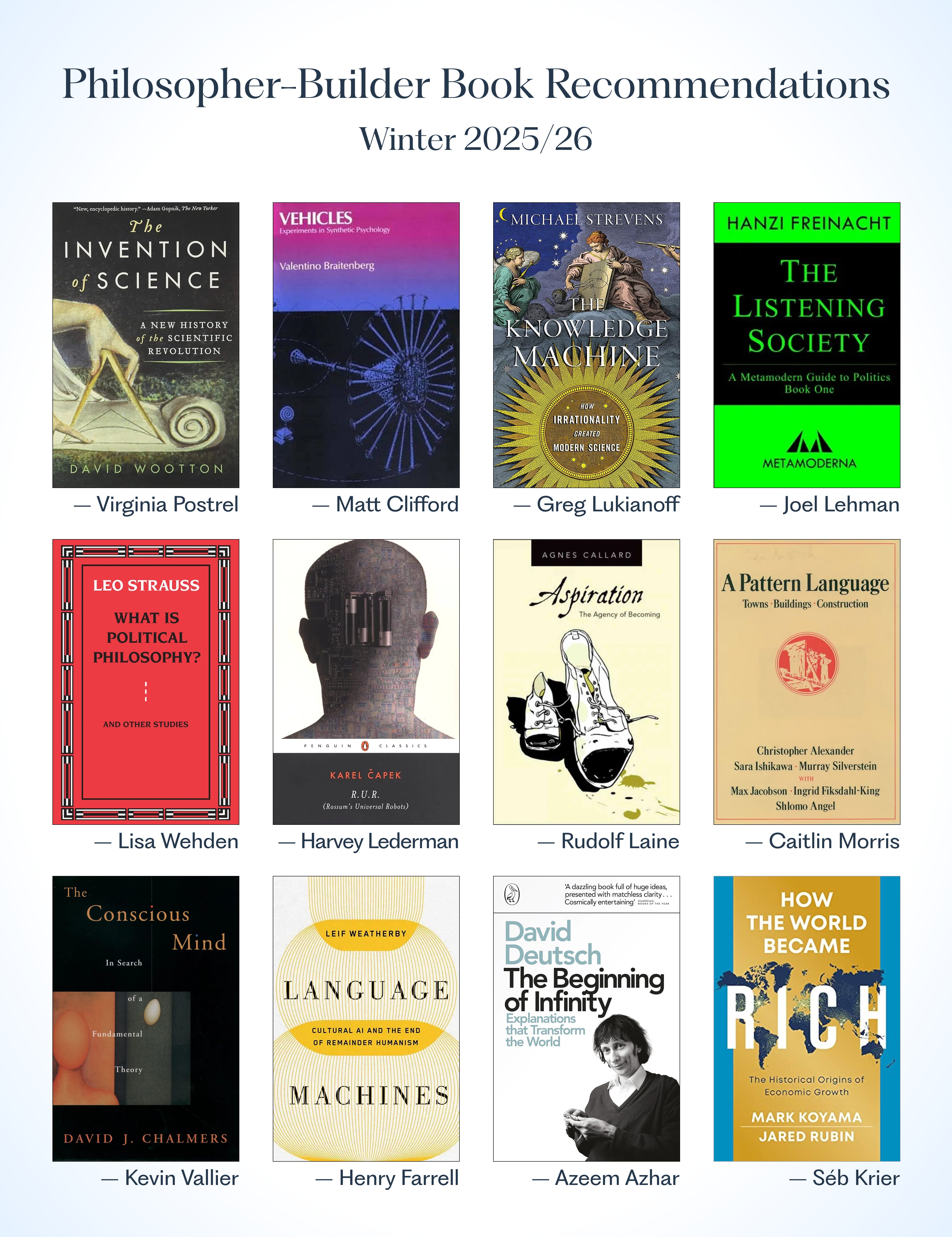
Many of you loved our Summer Reading List.
And so, with Christmas fast approaching, we asked 12 more of the sharpest minds we know for their philosopher-builder recommendations for you to settle down with over the holidays.
From ‘how thinking emerges’ to ‘Universal Robots’ to ‘LLMs as the death of the author,’ here are 12 picks from top AI entrepreneurs and thinkers to kickstart your ideas for 2026.
Read on for reflections from each recommender + a bonus recommendation from our Editorial Lead, Harry Law.
1. The Invention of Science
by David Wootton
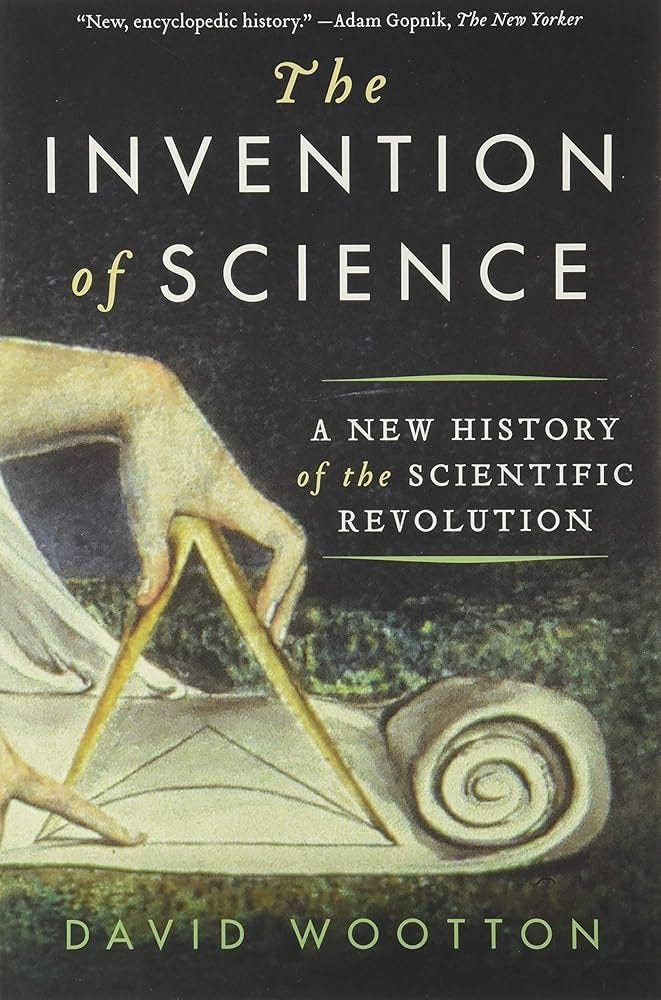
It’s a readable and staggeringly erudite work of intellectual history. I’ve read it once, listened to it once, and have embarked on a second reading.
Before the discovery of America, Wootton argues convincingly, Europeans lacked the concept of discovery. No language but Portuguese even had an adequate term. European intellectuals assumed that any new invention or idea must be a recovery of something previously known but lost or forgotten. (Never before reading this book had I realized just how weird the Aristotelean picture of our planet was and thus how disruptive the voyages of discovery were to its factual claims.)
On my second reading, I was struck by Wootton’s description of Diderot: “Diderot had one great advantage over us: graduating from the Sorbonne in 1732, he had been educated in the world of Aristotelian philosophy. He knew how shocking the destruction of that world had been, for he had experienced it at first hand. From a bird’s-eye view—the historian’s view—the Scientific Revolution is a long, slow process, beginning with Tycho Brahe and ending with Newton. But for the individuals caught up in it—for Galileo, Hooke, Boyle and their colleagues—it represents a series of sudden, urgent transformations.”
As we anticipate sudden, urgent transformations from the deployment of powerful AI, The Invention of Science offers a deep dive into a parallel heady, disruptive process.
Virginia Postrel,
Author, a columnist for Works in Progress, and an Abundance Institute fellow. She and Charles M. Mann will release a podcast series on the history of everyday technologies in early 2026.
2. Vehicles
by Valentino Braitenberg
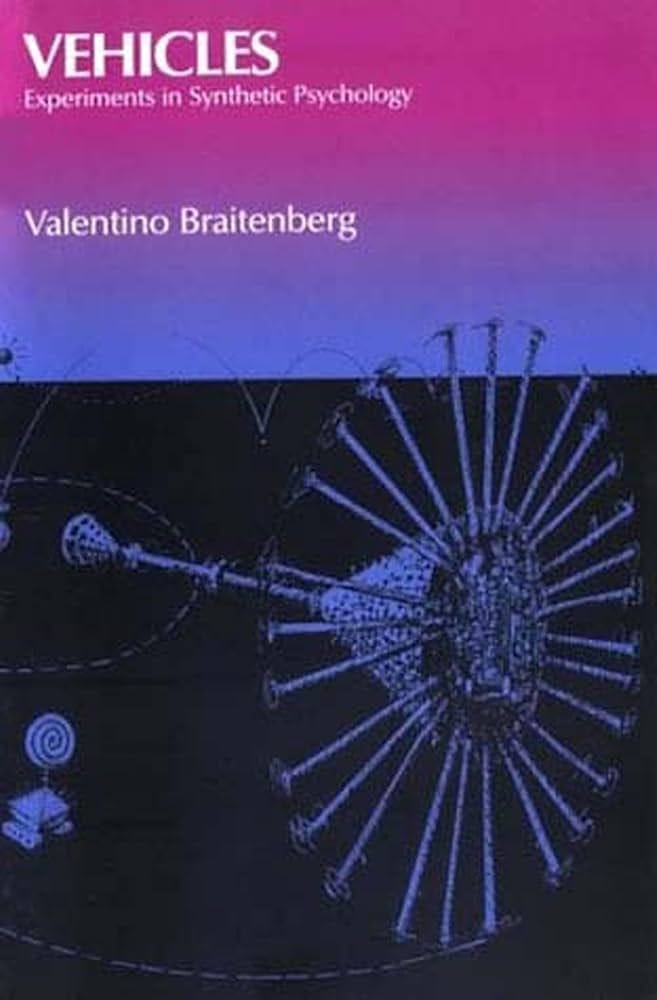
Now over 40 years old and long predating modern AI, Vehicles challenges us to think about the relationship between behaviour and intelligence.
Through a series of thought experiments, Braitenberg shows us that many things that look like “thinking” can emerge from simple, deterministic rules. As we increasingly interact with machines that (look like they) think, having good mental models of where complex behaviour comes from will be an essential component of epistemic hygiene!
Matt Clifford,
Co-Founder of Entrepreneurs First, and Chair of the Advanced Research + Invention Agency (ARIA).
3. The Knowledge Machine
by Michael Strevens
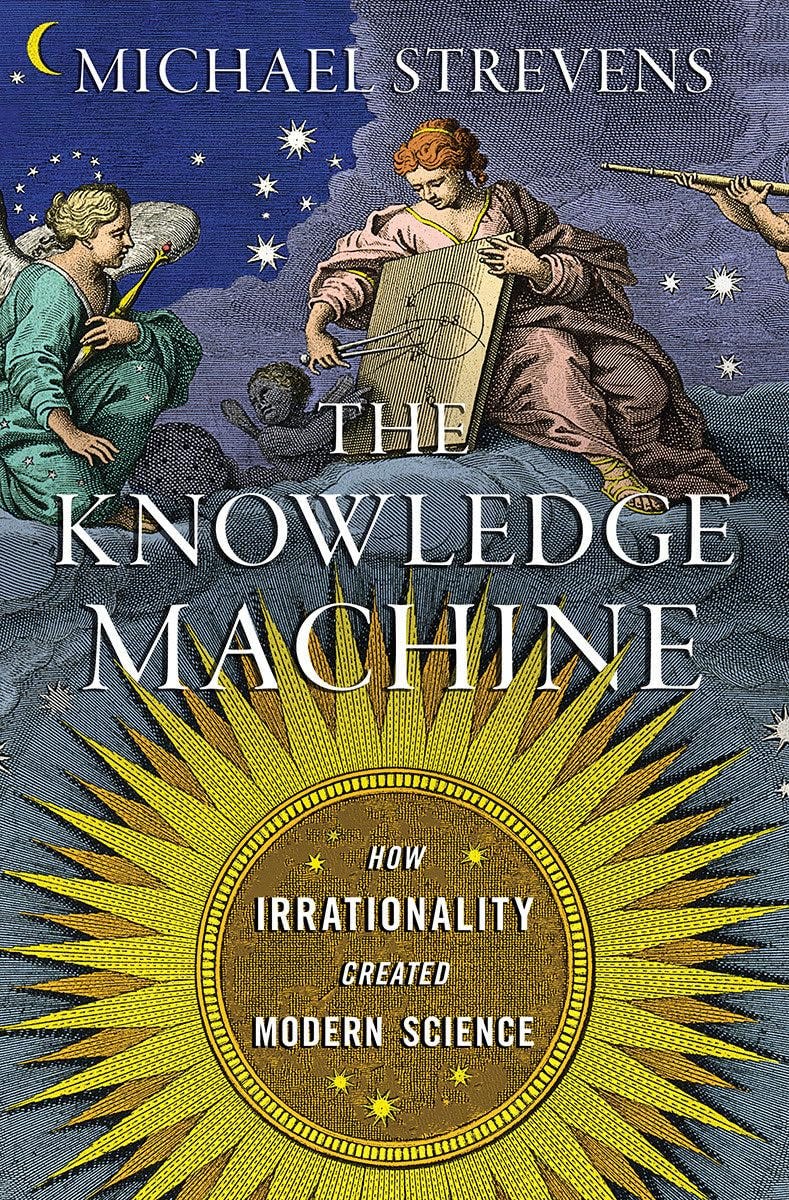
I am glad I read Michael Strevens’s The Knowledge Machine: How Irrationality Created Modern Science. I bristled at some parts of it, but I did appreciate its clarity.
Strevens writes in a stripped-down way about what makes modern science different: his “iron rule” that we’re supposed to bracket off things like beauty, morality, and metaphysics and let only publicly checkable evidence into our arguments.
I’m not persuaded that this is in any way “irrational” (hell, Hume did more damage with rationality than that), and I think we should all probably be rereading Karl Popper’s The Open Society and Its Enemies if we want the full-throated defense of liberal science. For how we actually build better decision- and knowledge-making systems at the institutional level, I’d also send people back to Montesquieu and The Federalist Papers, which treat checks, balances, and structured disagreement as epistemic tools as much as political ones. But The Knowledge Machine is a lucid, accessible, and genuinely interesting thought experiment. For anyone who cares about how we know what we know (especially technologists building new “knowledge machines” of their own), it’s well worth a read—ideally with you arguing with it in the margins.
Greg Lukianoff,
President & CEO at the Foundation for Individual Rights and Expression (FIRE). Author of The Coddling of the American Mind.
4. The Listening Society
by Hanzi Freinacht
For transformative AI to help humans flourish, much depends upon the wisdom of those designing and deploying it. Yet most technologists are blindly running on obsolescent ideas while firmly believing they are not — captured by unifaceted ideologies about progress or power. The Listening Society proposes a philosophy of flourishing that can meet the complexity and nuance of the world. It’s one of the most impactful books I’ve ever read. Even if you don’t like it, at the very least it will provoke new thoughts.
Joel Lehman,
Former OpenAI co-team lead on openendeness. Author of Why Greatness Cannot be Planned. Cosmos Fellow.
5. What Is Political Philosophy?
by Leo Strauss
In What Is Political Philosophy?, Strauss highlights how modern thought has substituted key classical concepts with new ones - most notably replacing the classical idea of virtue with the modern notion of responsibility.
The implication of this shift is that we now frame our behavior and moral standards in ways that make them easier to satisfy, even as we erode the substance of the ideals they once represented, diminishing the demanding excellence at the core of virtue.
I would encourage our generation of technologists to examine our industry’s terminology in light of this provocation. When we invoke words like courage or freedom, what work are they doing for us - and do they still call us to excellence, or serve to comfort us with a veneer of virtue?
Lisa Wehden,
Founder and CEO at Plymouth Street. Former President of the Oxford Union.
6. R.U.R.
by Karel Čapek
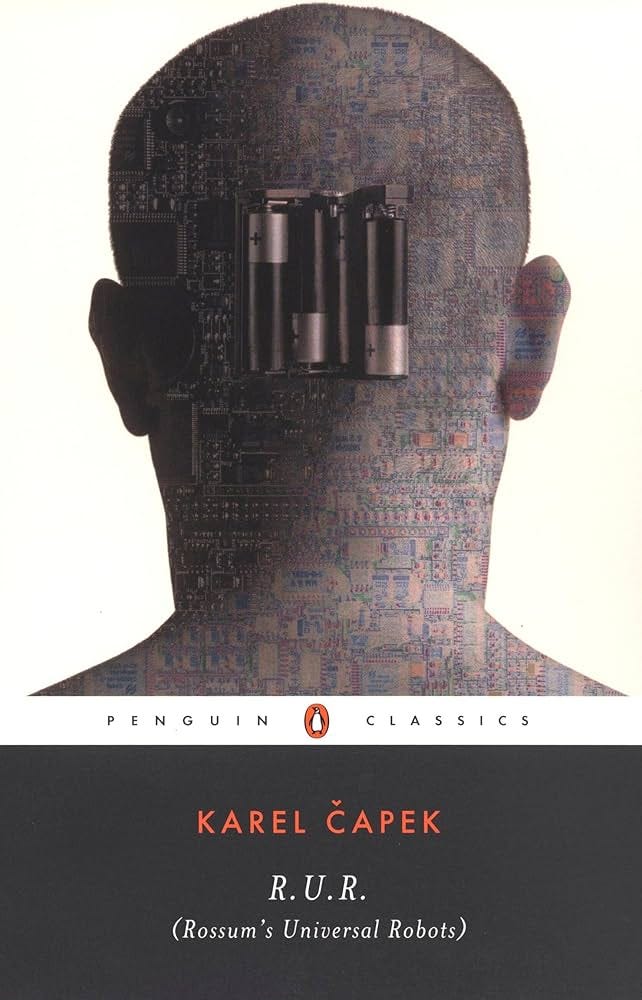
Karel Čapek’s 1920 R.U.R., which introduced the word “robot” in its modern sense, has food for thought on almost every aspect of our current technological landscape. There’s a scientist who built robots because he wanted to play God, and his nephew, a founder, who just wanted to make money. There’s a General Manager who believes his product will liberate humans from the drudgery of work, and an engineer who loves his job. There’s a humanitarian who worries about the robots’ souls, while widespread infertility decimates the human population. In the background of it all, there’s the question: what is it, really, to be human? And what, if anything, is that humanity worth?
Harvey Lederman,
Professor of Philosophy at UT Austin. Writer of ChatGPT and the Meaning of Life.
7. Aspiration
by Agnes Callard
Aspiration is a thoughtful book, especially useful as an indirect and unintended commentary on much discourse about AI alignment. This discourse often assumes what Callard calls a “decision-theoretic” model of values as fixed and unchanging. Instead, Callard argues that value change, not just accidental but sought out, is a core part of how human values work.
(Rudolf also recommended Liberty by Isaiah Berlin, particularly the essays on J.S.Mill)
Rudolf Laine,
Co-founder of Workshop Labs, ML Engineer, and Writer at No Set Gauge.
8. A Pattern Language
by Christopher Alexander, Murray Silverstein, and Sara Ishikawa
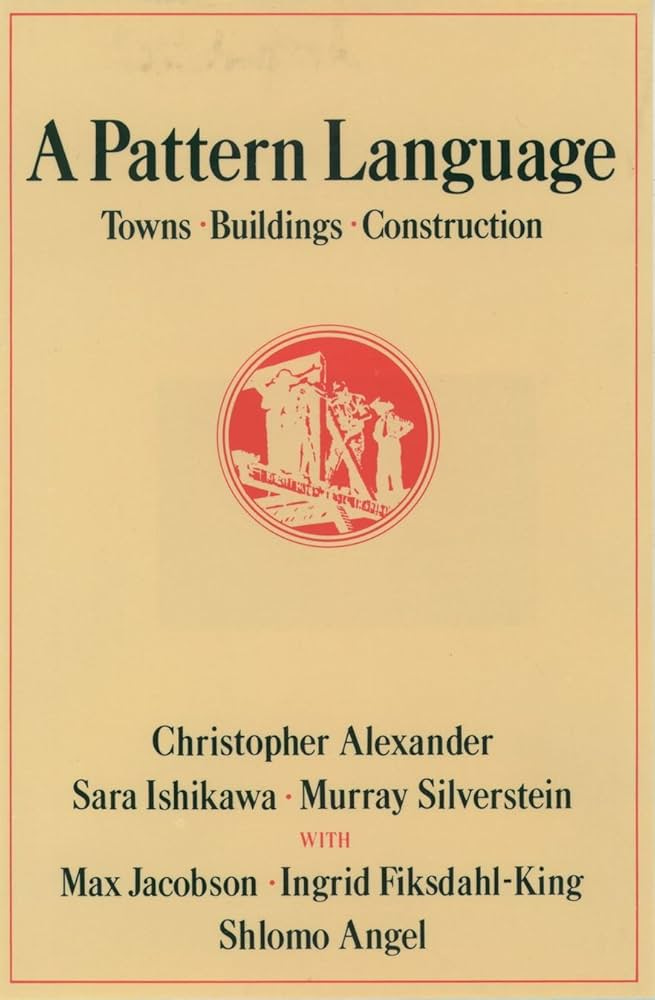
A Pattern Language might be on the shelf of every architect, but it’s more broadly about understanding the conditions that allow human life to flourish.
How do ideas spread? What creates a sense of belonging? Why don’t people dance in the streets anymore? The authors identify a series of “patterns” (which also come across beautifully as a love letter to design details) that create places where people feel alive and connected.
Reading between the lines and beyond just sometimes outdated architecture, these patterns are responses to deep human needs - enabling shifts between privacy and spontaneous encounter, exploring the role of different “distances” of engagement. A vocabulary not just for thinking about physical spaces but about what we’re trying to create when we design for human thriving. This is less of a “read all at once” and more of a “thumb through like recipes” book for me.
(Caitlin also recommended Speculative Everything: Design, Fiction, and Social Dreaming by Anthony Dunne and Fiona Raby)
Caitlin Morris,
MIT Media Lab Researcher and Educator who designs technology for curiosity-led social learning. Cosmos Grantee.
9. The Conscious Mind
by David Chalmers
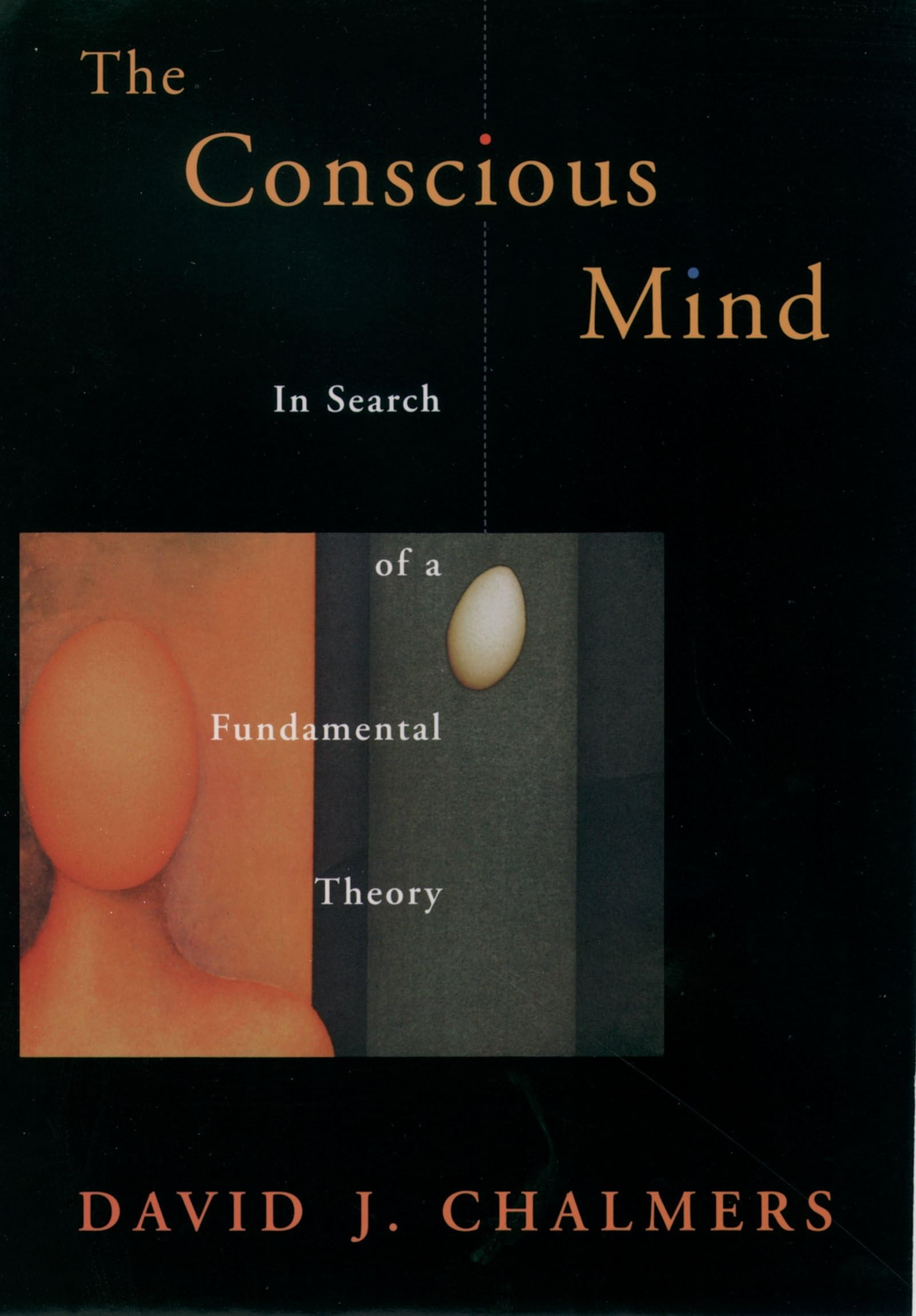
The hard problem of consciousness is easy to state: why is there something it is like to be you?
Neuroscience can explain which brain states correlate with which experiences. But the hard problem of consciousness comes from recognizing that correlation isn’t identity, as we can presumably have the correlated brain states without the corresponding conscious states. We can have brains without the stuff of experience (qualia).
In The Conscious Mind Chalmers works through this puzzle with famous clarity. The payoff for technologists is striking. It can help readers see how, for all we know, AI could be conscious even if the mind is immaterial.
Kevin Vallier,
Professor of Philosophy & Director of Research at the Institute for American Constitutional Thought and Leadership, University of Toledo.
10. Language Machines
by Leif Weatherby
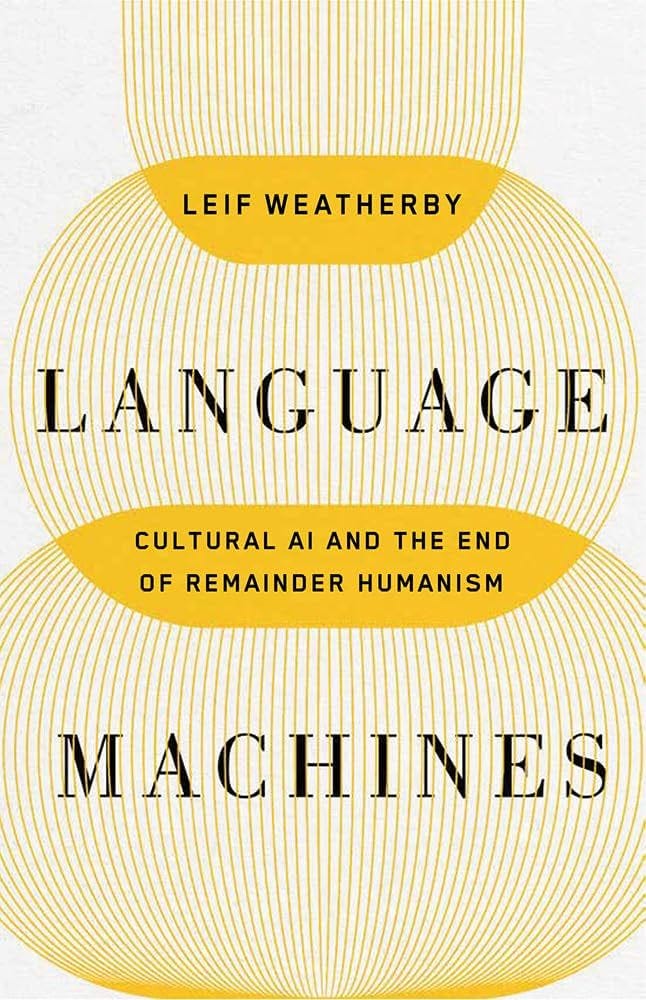
Leif Weatherby’s Language Machines argues that AI is not agentic intelligence but the death of the author made concrete. Structuralist theorists like Jakobson and Lacan argued that language was a generative system of signs, which existed independently of the ground truths that it described. Weatherby marries their ideas to those of AI researchers such as Claude Shannon, Walter Pitts, and Warren McCulloch. The conclusion: LLMs are not individual intelligence or anything like it, but language as a system, made capable of speaking.
(Henry also recommended The Unaccountability Machine by Dan Davies)
Henry Farrell,
SNF Agora Professor of International Affairs at Johns Hopkins University. Writer at Programmable Mutter.
11. The Beginning of Infinity
by David Deutsch
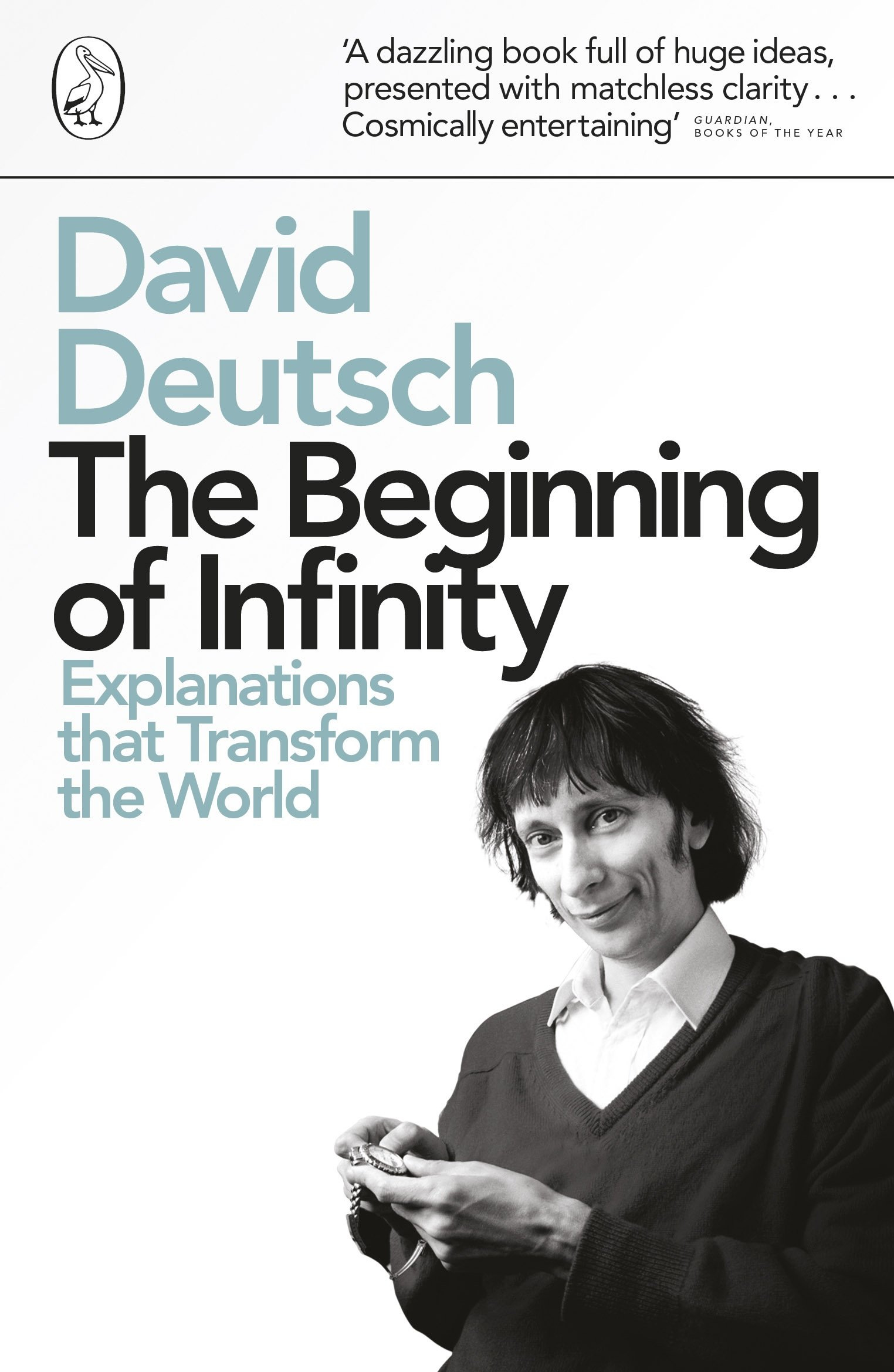
The Beginning of Infinity reshaped how I think about progress, knowledge, and what’s actually possible. He makes optimism rigorous.
Deutsch argues that knowledge creation can continually solve problems and transcend apparent limits, challenging us to reject fatalism about constraints we mistake for destiny.
Progress isn’t guaranteed, but it’s achievable. What drives it? Conjecture, criticism, and relentless error-correction, not certainty or dogma. The idea that humans are “universal explainers” capable of understanding anything in principle feels both humbling and empowering; we’re limited only by what we haven’t yet figured out.
Yet his most useful insight centres on explanation itself: good explanations are hard to vary while still accounting for what we observe, like a key cut to fit one lock. Change one element and the explanation collapses. The clarity of distinguishing real understanding from mere description or correlation matters because it shows us where to focus. We’re building knowledge that compounds.
Azeem Azhar,
Founder of Exponential View and investor, author of The Exponential Age.
12. How the World Became Rich
by Mark Koyama and Jared Rubin
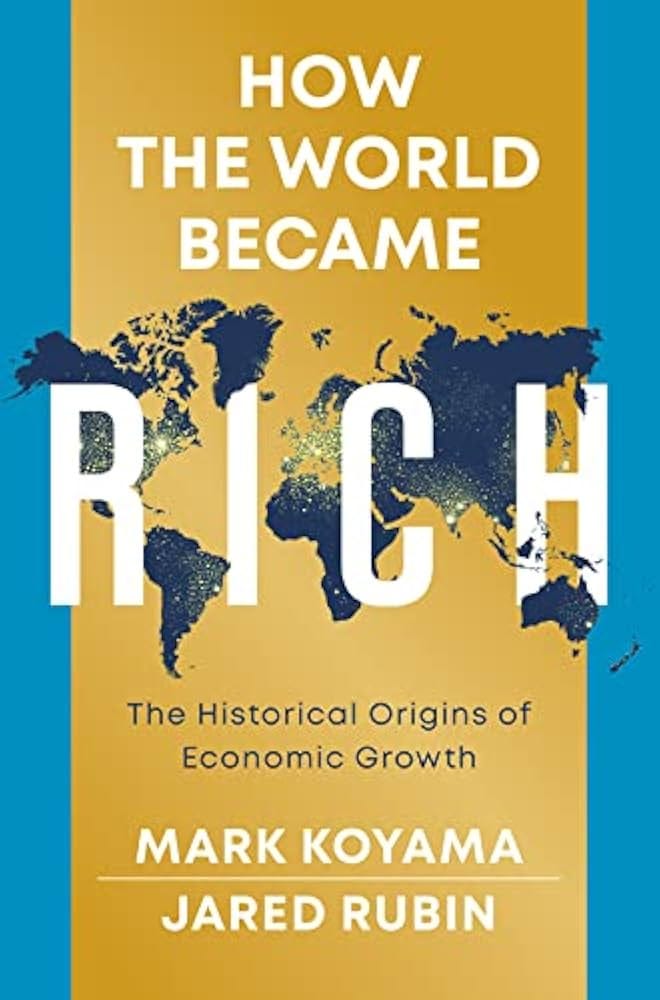
The tech world has rediscovered big questions about growth: why did the industrial revolution happen where it did, what role did states play, and why do some transformations stick while others don’t?
How The World Became Rich explores the competing explanations without forcing a single answer — a useful corrective for anyone whose model of progress starts and ends in the lab, or the state.
Séb Krier,
Frontier Policy Development Lead at Google DeepMind.
Bonus: The Turing Test Argument
by Bernardo Gonçalves
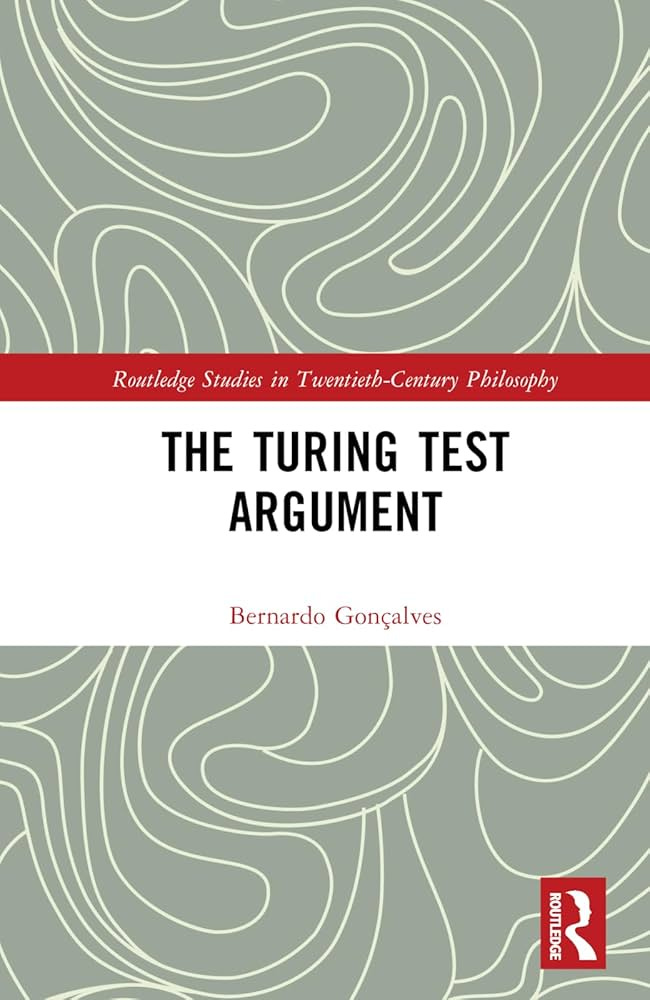
In The Turing Test Argument Gonçalves explores one of the most well known, and most misunderstood, episodes in the history and philosophy of AI: Alan Turing’s imitation game.
This little book argues that the test was a response to swirling controversy surrounding Turing’s debates with physicist Douglas Hartree, chemist and philosopher Michael Polanyi, and neurosurgeon Geoffrey Jefferson.
Gonçalves thinks that Turing’s focus on learning and adaptability sought to counter Hartree’s view of computers as calculation engines, that tasks like the composition of poetry aimed to address Jefferson’s demands for creative abilities, and that the introduction of open-ended conversation (rather than the use of rule-based games like chess) was designed to confront Polanyi’s concerns that human knowledge couldn’t be formalised by machines.
It’s a short but essential read for anyone interested in deeply understanding a moment that never seems to stop making headlines!
Harry Law,
Cosmos Editorial Lead, former DeepMind Policy Research, and Cambridge University Researcher.
Thanks to Virginia, Matt, Greg, Joel, Lisa, Harvey, Rudolf, Caitlin, Kevin, Henry, Azeem, Séb, and Harry for contributing to this list.
And let us know your book recommendations for the holidays in the comments!
Cosmos Institute is the Academy for Philosopher-Builders, technologists building AI for human flourishing. We run fellowships, fund fast prototypes, and host seminars with institutions like Oxford, Aspen Institute, and Liberty Fund.
Great list. I’m currently working on a review of Language Machines. A dense book, but some great syntheses of ideas and theories. Hopefully more people will continue to read it.
A strong second for Virginia Postrel’s enthusiasm for David Wooten’s book The Invention of Science. A commonplace view today is that there was no “scientific revolution” in 17th century Europe, that the whole idea denigrates the importance of other contributions to our understanding of the natural world. Wooten’s book is the best ever explanation of what was unique about the “invention” of science in Europe and the reasons it transformed human existence in a way that other surges of interest in the reasons the world is the way it is did not.