

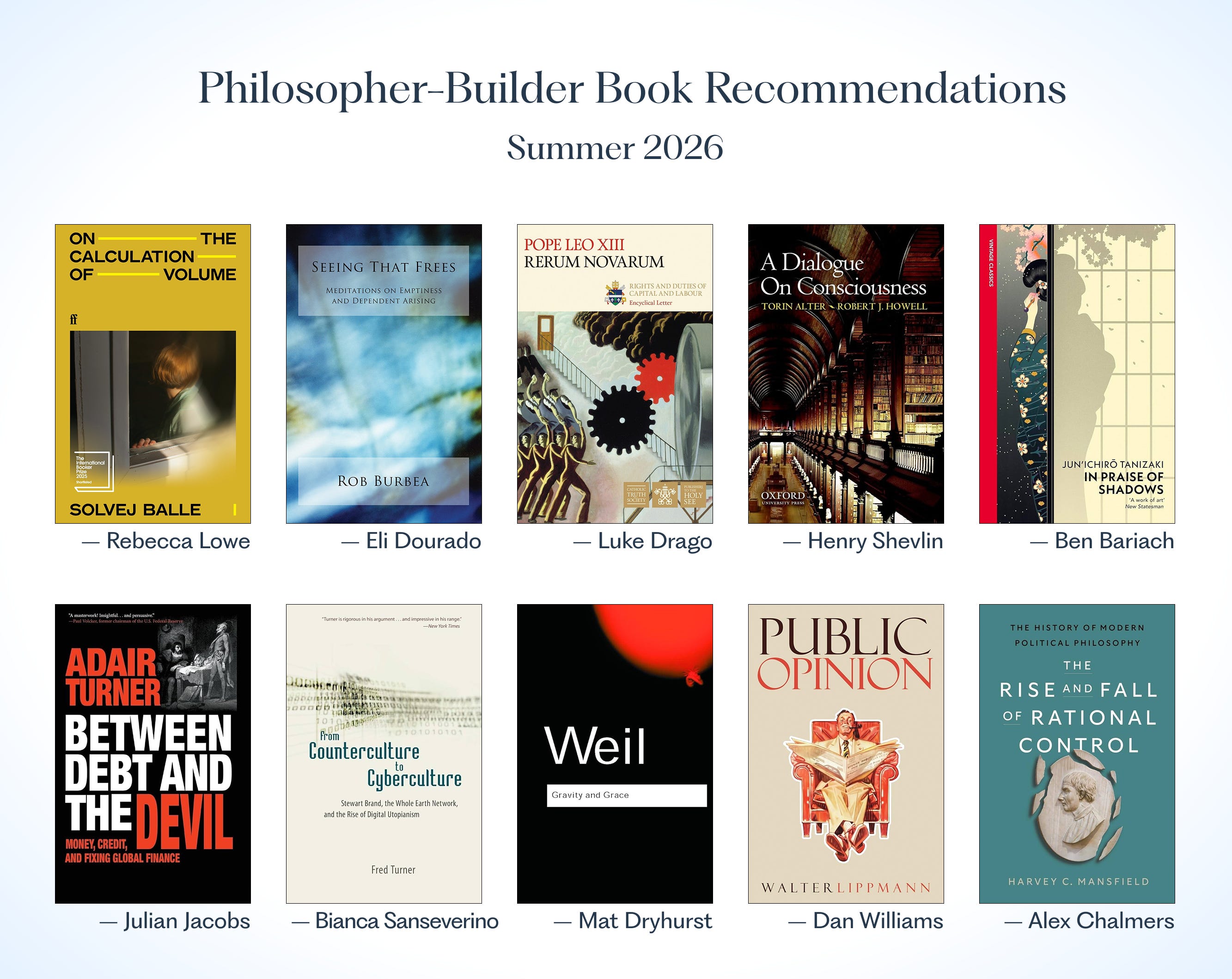
As we reach the height of summer, we asked ten thinkers and technologists in Cosmos’s network for some reading recommendations to enjoy in the sun.
They cover everything from fiction, through to economics, religion, political philosophy, and art.
Read on for reflections on each choice and leave your additions in the comments!
1. On the Calculation of Volume
by Solvej Balle

The best novels I’ve read recently are the first four of Solvej Balle’s ongoing On the Calculation of Volume series. It’d be slightly inaccurate to tell you they’re “Groundhog Day” novels. And it might make you think they’re less original and smart than they are. Okay, they do center around a day that’s sort of ‘repeating’. But by page three, you’ve forgotten the movie that had a monopoly on this idea.
I recently wrote 6,000 words about how Balle engages with the philosophy of time in these novels. Yet usually I hate novelists getting explicitly philosophical. It annoys me when Iris Murdoch goes into ‘philosophy mode’. And I thought the page of ‘here’s what the philosopher character is working on’ damaged Paul Auster’s excellent Baumgartner. Yet Balle introduces philosophy without didacticism or clumsiness. And not just philosophy of time (just!). She’ll make you reconsider core concepts from identity to love.
Philosophy Senior Research Fellow, and Director of Emerging Scholars, at the Mercatus Center at George Mason University.
2. Seeing That Frees: Meditations on Emptiness and Dependent Arising
by Rob Burbea
The Buddha said everything is empty. Burbea’s book is the clearest and most practical account I’ve found of what that actually means. He starts with simple, accessible examples showing how things we take to be solid and fixed actually depend on the way we look at them, and how, once we see that, we can choose ways of looking that are progressively more freeing. From there he builds toward the deepest teachings, all the way to the claim that even emptiness is empty.
What I love is that the book is both rigorous and usable. Every idea comes with an exercise, and even a beginner gets something to work with from the first chapters.
We spend enormous energy chasing financial and political freedom. This is a book about a third kind: liberation of the self. All the more so in an unpredictable future, that may turn out to be the most robustly important freedom of them all.
Head of Strategic Investments at Astera Institute.
3. Rerum Novarum
by Pope Leo XIII
The last time a pope named Leo waded into the technology debate of the day, it went pretty well. Rerum Novarum grapples with the question of how labor and capital should interact in a world newly dominated by machines in the midst of the industrial revolution. The central insights – that labor and capital owe mutual obligations to each other, and that the goal of innovation should be to serve people – is even more relevant on the eve of transformative AI. It’s a strong recommendation for anyone thinking about building for humans as others race to build for machines.
Member of technical staff at Thinking Machines. Previously co-founder at Workshop Labs.
4. A Dialogue on Consciousness
by Torin Alter & Robert J. Howell
With the rise of intelligent machines, questions about consciousness are becoming increasingly urgent. Unfortunately, almost everyone is confused about the topic. Part of the trouble is that the canonical arguments and framework are scattered across a dozen books and journal articles, or else compressed into encyclopedia entries too dense to teach you anything.
This book is an excellent solution. It assumes no background, is concise, covers an enormous amount of ground, and keeps its focus on the core arguments and positions in the philosophy and metaphysics of mind. I used it as the intro text for my own philosophy of mind classes for years, sometimes getting students to read it aloud in parts. Your mileage may vary on the dialogue format, but I find it makes for a breezier read. There’s also a deeper reason it works for me, namely that I don’t really understand an argument until I’ve heard it aggressively critiqued, and here you get both sides of several positions, properly fought out rather than catalogued.
Note that the book doesn’t cover the science of consciousness. However, given how fast that field moves, this is possibly for the better, and means that despite being published in 2009, nothing here is obviously out of date.
If you want a real grounding in the metaphysics of mind, the core arguments about consciousness, and a feel for why the whole problem is so hard, and you’d rather not spend months reading across half a dozen texts to get it, this is my best recommendation.
Philosopher at Google DeepMind and the University of Cambridge.
5. In Praise of Shadows
by Jun’ichirō Tanizaki

On its face, an early twentieth century essay about Japanese aesthetics has nothing to do with AI or technology. But the premise of the short book is how the interplay of shadow and imperfection contrasts the then prevailing western appreciation for perfection and light. The AI discourse is implicitly governed by the pursuit of productivity, efficiency and treats the displacement of the human as a side effect that should be mitigated externally.
Reading these older books on the appreciation of imperfection with artificial intelligence in mind reminds us to reorient towards the human experience. Promoting imperfect aesthetics, encouraging contemplation, are all qualities that have been left by the wayside in pursuit of a scalar maximisation of helpfulness and productivity. Instead, systems that embrace imperfection may be the key to ensuring human contemplation and complimenting human-AI interaction.
Ben Bariach
Frontier AI safety and societal lead at Microsoft Superintelligence and Senior Research Fellow at Cosmos Institute.
6. Between Debt and the Devil
by Adair Turner
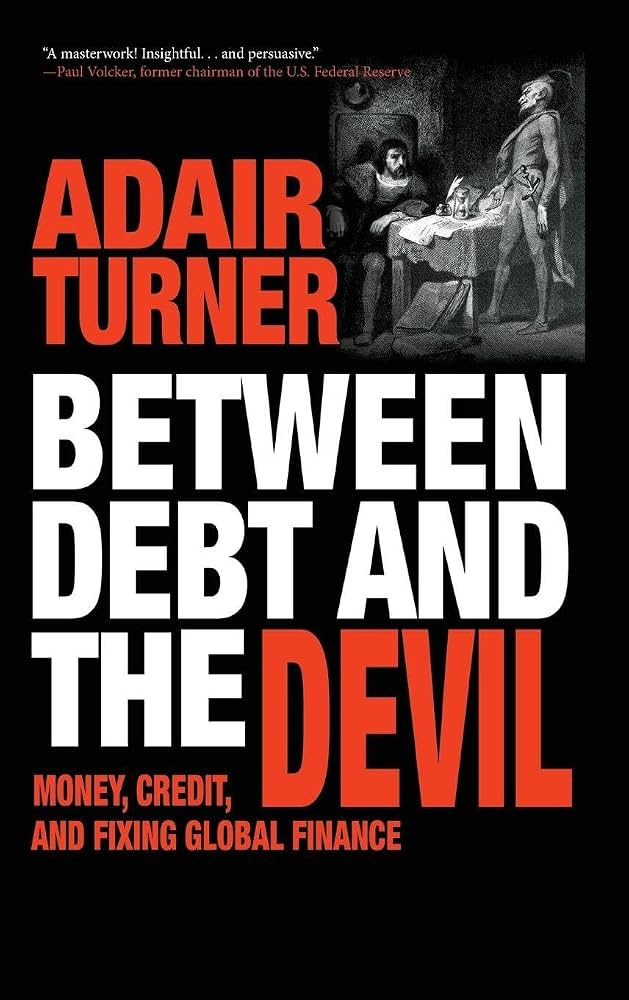
A fascinating exploration of the emergence of British and American credit systems.
Between Debt and the Devil offers a thoughtful analysis of how the credit system has interacted with the boom-bust cycle in financial markets. It’s particularly relevant for understanding the ways in which finance interacts with economic outcomes.
Research Scientist and Economist at Google DeepMind.
7. From Counterculture to Cyberculture: Stewart Brand, the Whole Earth Network, and the Rise of Digital Utopianism.
by Fred Turner
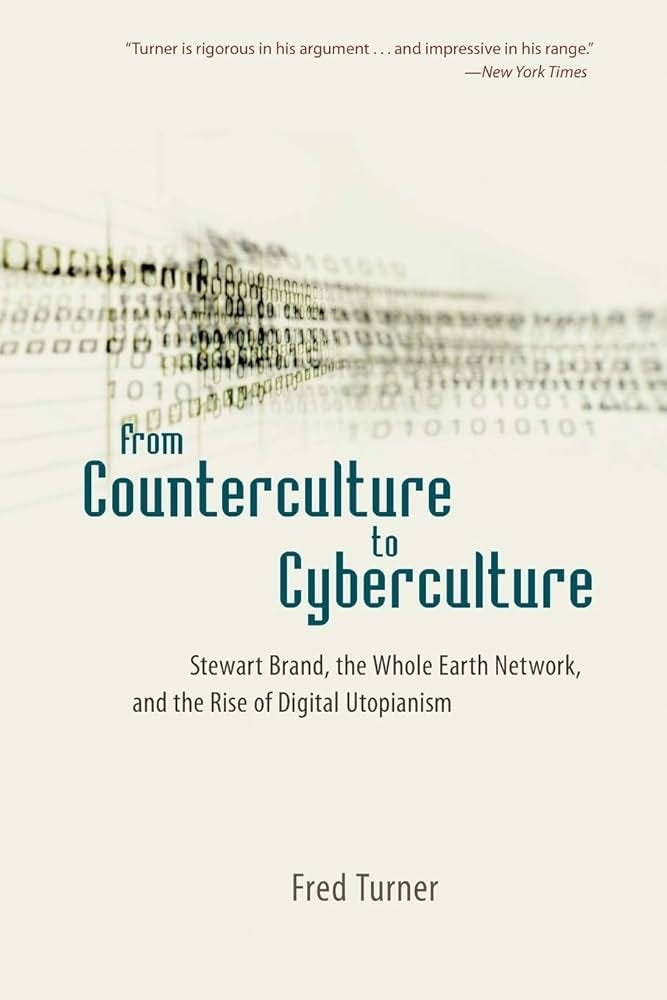
From Counterculture to Cyberculture traces the origins of techno-utopianism from the self-sufficient communes of the 60s, to the hobbyist programming scene of the 70s, to the dot-com boom of the 90s. Turner reconstructs the genealogy of today’s Silicon Valley worldview: how the counterculture’s faith in technology as a liberating force, a way to build community and remake the self without politics, mutated into the techno-individualism of the Valley. It’s also great fun, running through LSD tests, geodesic-dome communes and Buckminster Fuller lectures on its way to the microchip.
Bianca Vimercati Sanseverino
Head of Operations at Cosmos Institute.
8. Gravity and Grace
by Simone Weil
Weil frames attention as the rarest form of generosity. For her, attention requires bypassing ego to become a receptive and faithful witness. Living well alongside ubiquitous AI may require building the spaces and habits that keep attention sacrosanct.
Artist and Senior Research Fellow at the Oxford HAI Lab.
9. Public Opinion
by Walter Lippmann
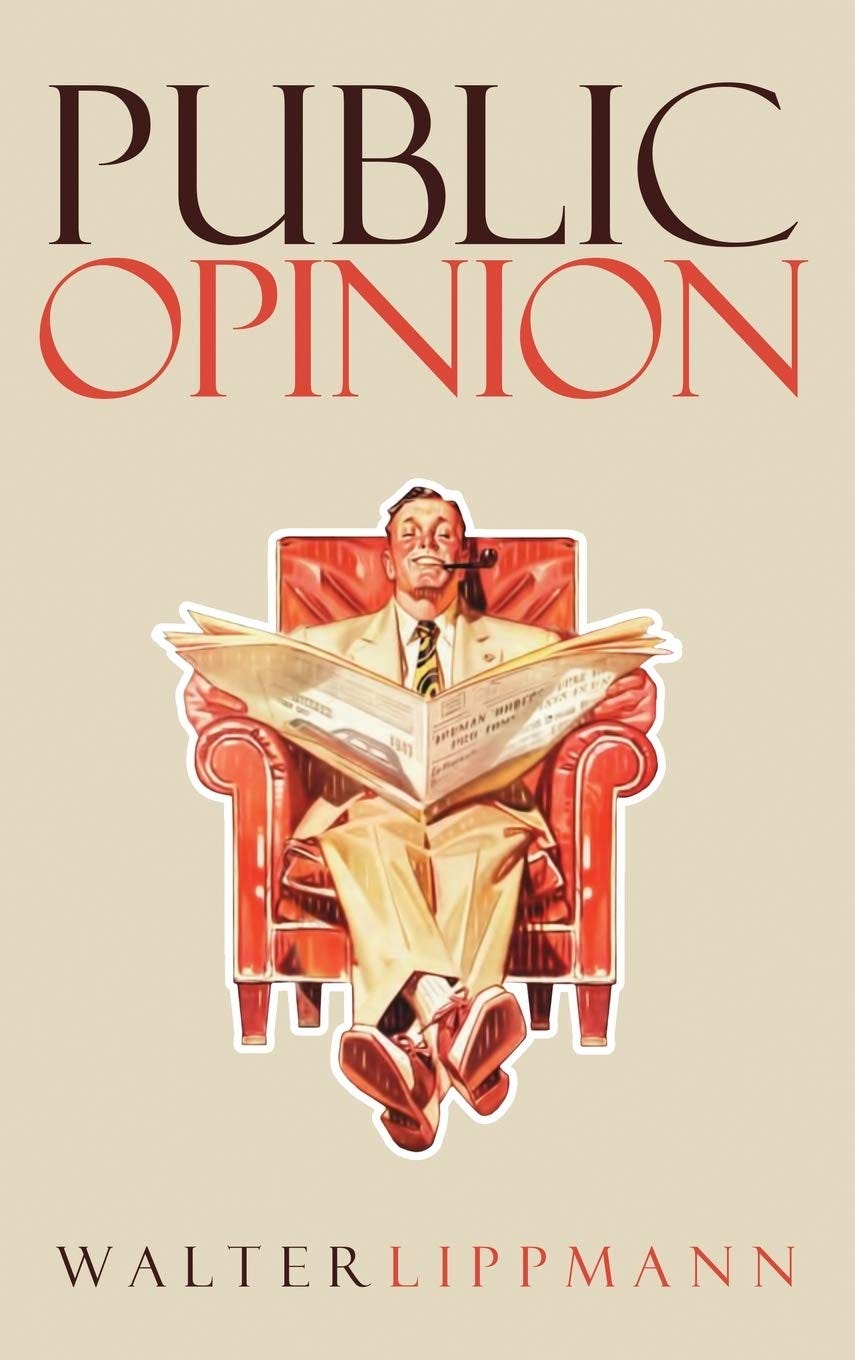
The central thesis of ‘Public Opinion’ is as obvious as it is profound: the modern world is too big and complex for anybody to understand. Writing in 1922, in the wreckage of the First World War, Lippmann’s still-underread masterpiece identifies the great epistemic challenges of modernity and explains why most people don’t appreciate their importance.
The small-scale social worlds that characterised most of human evolution and history were fundamentally knowable. In contrast, we have no hope of grasping the scale and complexity of the modern world. So, we rely on highly selective, simplifying mental models that compress and distort reality, stitched together by interactions among first-hand experience, Pleistocene intuitions, motivated reasoning, and biased media reporting. We then confuse these mental maps with the territory, leading to confusion, frustration, bad politics, and explosive divisions whenever we confront citizens who don’t view reality through the same simplifications and distortions.
The catastrophes of fascism and communism in the twentieth century – in both cases, popular ideologies that simplified and distorted modernity in disastrous ways – vindicate Lippmann’s worries, as do the recurrent challenges that democracies have faced in delivering competent government. His own proposed solution –to make democracies more technocratic, more reliant on rigorous expert bodies of knowledge that can overcome ordinary human bias and fallibility – has had, at best, mixed success.
A central question we will confront in an era of rapid advances in AI is whether it will exacerbate the epistemic challenges Lippmann identified, or whether it might finally deliver the objective, technocratic knowledge that saves us from our own ignorance, confusion, and political divisions.
Assistant Professor in Philosophy at the University of Sussex, Associate Fellow at the Leverhulme Centre for the Future of Intelligence, and author of Conspicuous Cognition.
10. The Rise and Fall of Rational Control
by Harvey Mansfield
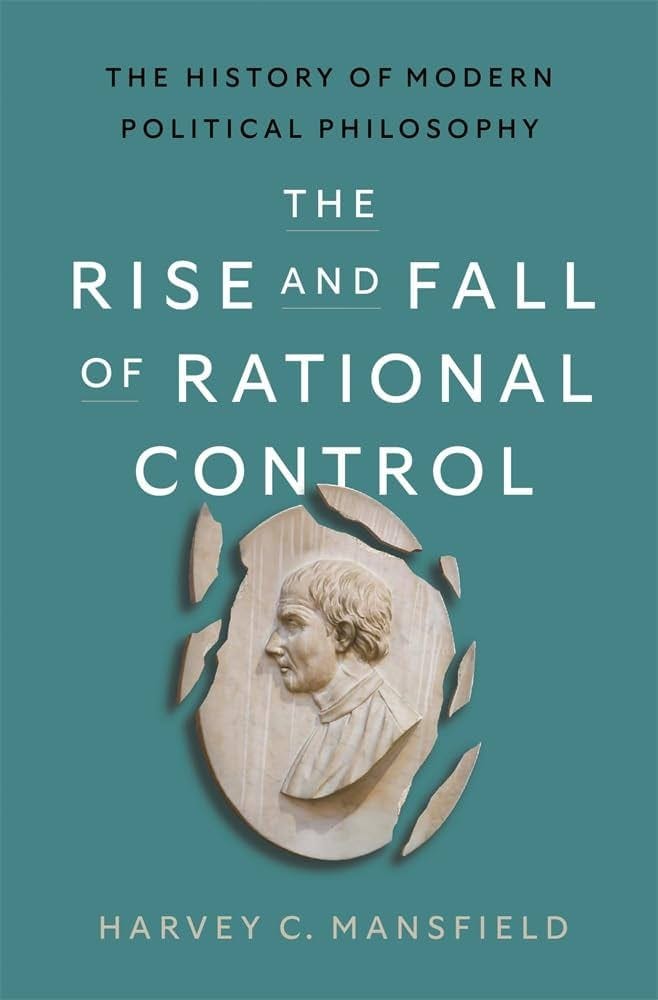
Based on Harvey Mansfield’s legendary course at Harvard on modern political philosophy, The Rise and Fall of Rational Control argues that the defining feature of modern thought is the use of reason to master the world, rather than merely to understand it. This is the logic of science and technology, but Mansfield argues that it has its roots in politics. Francis Bacon’s programme of “effecting all things possible” for the relief of man’s estate was made possible by Machiavelli shifting judgment from the good to what actually works.
Ultimately, Machiavelli’s successors could not accept the politics of necessity. Hobbes and Locke tried to construct a justice of their own through the social contract, while Rousseau, Hegel, and Marx stopped seeing reason as a fixed human capacity and instead something that unfolds through historical stages. Nietzsche then took an axe to the project of rational control, showing that its endpoint is the last man – a contented figure, who embraces comfort at the expense of creativity and greatness.
This book is a corrective to anyone who sees building as a neutral act, rather than the culmination of a political and moral project, which risks paving the way for the world of the last man. It’s also a great introduction to Leo Strauss’s method. Strauss, who taught Mansfield, believed in recovering what a thinker meant in their own terms and refused to reduce them to artifacts of their historical period. After all, if these questions are permanent, then maybe twenty-first century technologists can still learn from sixteenth century books.
Staff writer at Cosmos Institute.
Thanks to Rebecca, Eli, Luke, Henry, Mat, Julian, Ben, Bianca, Dan, and Alex for contributing to this list.
And let us know your book recommendations in the comments!
Cosmos Institute is the Academy for Philosopher-Builders, technologists building AI for human flourishing. We run fellowships, fund AI prototypes, and host seminars with institutions like Oxford, Aspen Institute, and Liberty Fund.
So fun to see On the Calculation of Volume on the list! I am also a fan :)
Excellent list! Hope to add a few of these to my list ...