


The institutions of a free society allow people to govern themselves. From media that permits expression to markets that enable the open exchange of goods and services, institutions help us flourish as individuals and in tandem with others.
AI is changing their foundational assumptions. By lowering the cost of expression, persuasion, inquiry, delegation, and coordination, these systems are modifying the character of the basic activities that liberal institutions seek to accommodate. It floods them with activity at volumes they were not designed to absorb and enables behaviors they were not designed to manage.
At stake is the capacity to deliberate about the lives we want to lead. AI may help us live more purposefully, or it may narrow our field of view and shepherd us toward ends chosen by others. To help build AI that protects and expands liberty, we are introducing the Cosmos Research Group to study autonomy, truth-seeking, and decentralization.
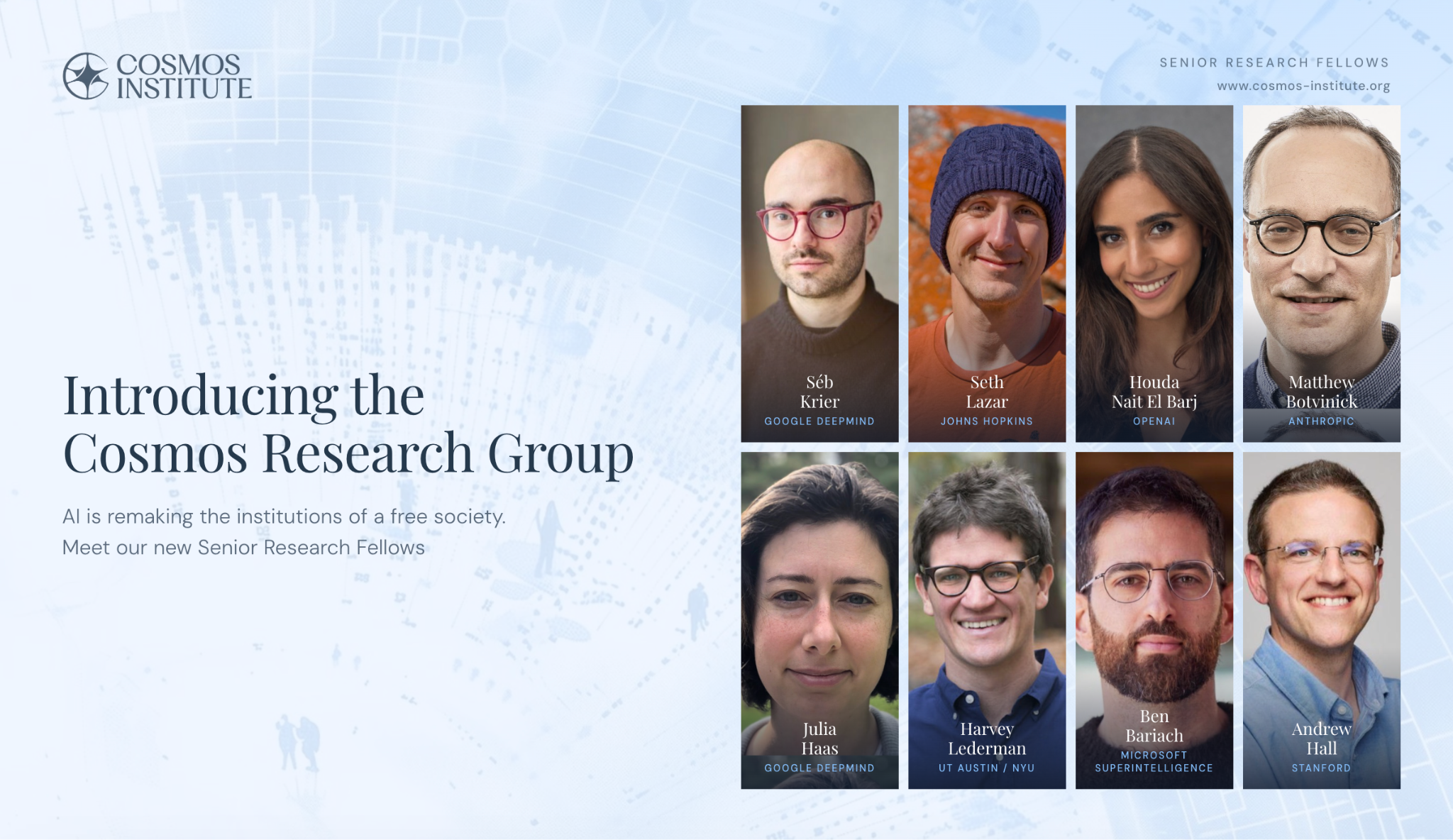
These are the philosophical foundations that frontier development needs if AI is to help us lead happier, healthier, more prosperous, and more self-directed lives. We are joined in this effort by a new cohort of Senior Research Fellows from frontier labs and the academy. Their work will help us to open new lines of inquiry, shape our research agenda, and connect philosophical questions to technical choices that determine what AI is and how it will be used.
This cohort joins Senior Research Fellows Philipp Koralus and Vincent Wang-Maścianica, and Founding Fellows including Jack Clark, Ivan Vendrov, and Tyler Cowen. We’ll be sharing more information about our work in the coming months, including opportunities for researchers to partner with us.
Séb Krier, Frontier Policy Development Lead, Google DeepMind
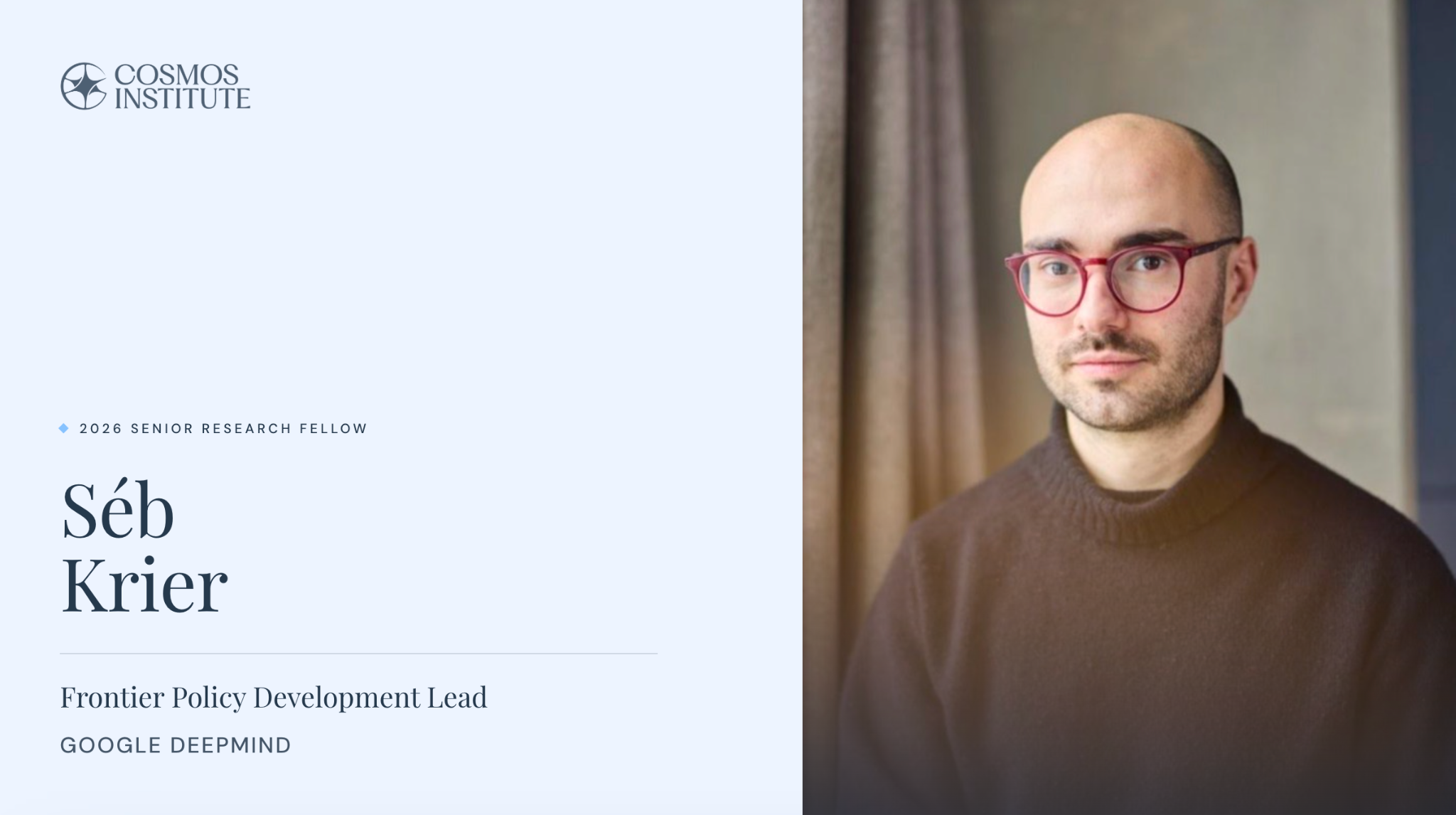
Séb Krier is the Frontier Policy Development Lead at Google DeepMind, where he focuses on the governance of frontier AI systems. He previously served as a Senior Technology Policy Researcher at Stanford University’s Cyber Policy Center and Head of Regulation at the UK Government’s Office for Artificial Intelligence. A former international lawyer at firms including Freshfields Bruckhaus Deringer and Bryan Cave Leighton Paisner, Séb blends technology, law, and institutional economics to explore the future of AI. His writing brings a classical liberal lens to frontier technology, focusing on how technology can be designed to resist zero-sum traps, protect individual liberty, and enable human flourishing.
Seth Lazar, Founding Director of Machine Intelligence & Normative Theory (MINT) Lab
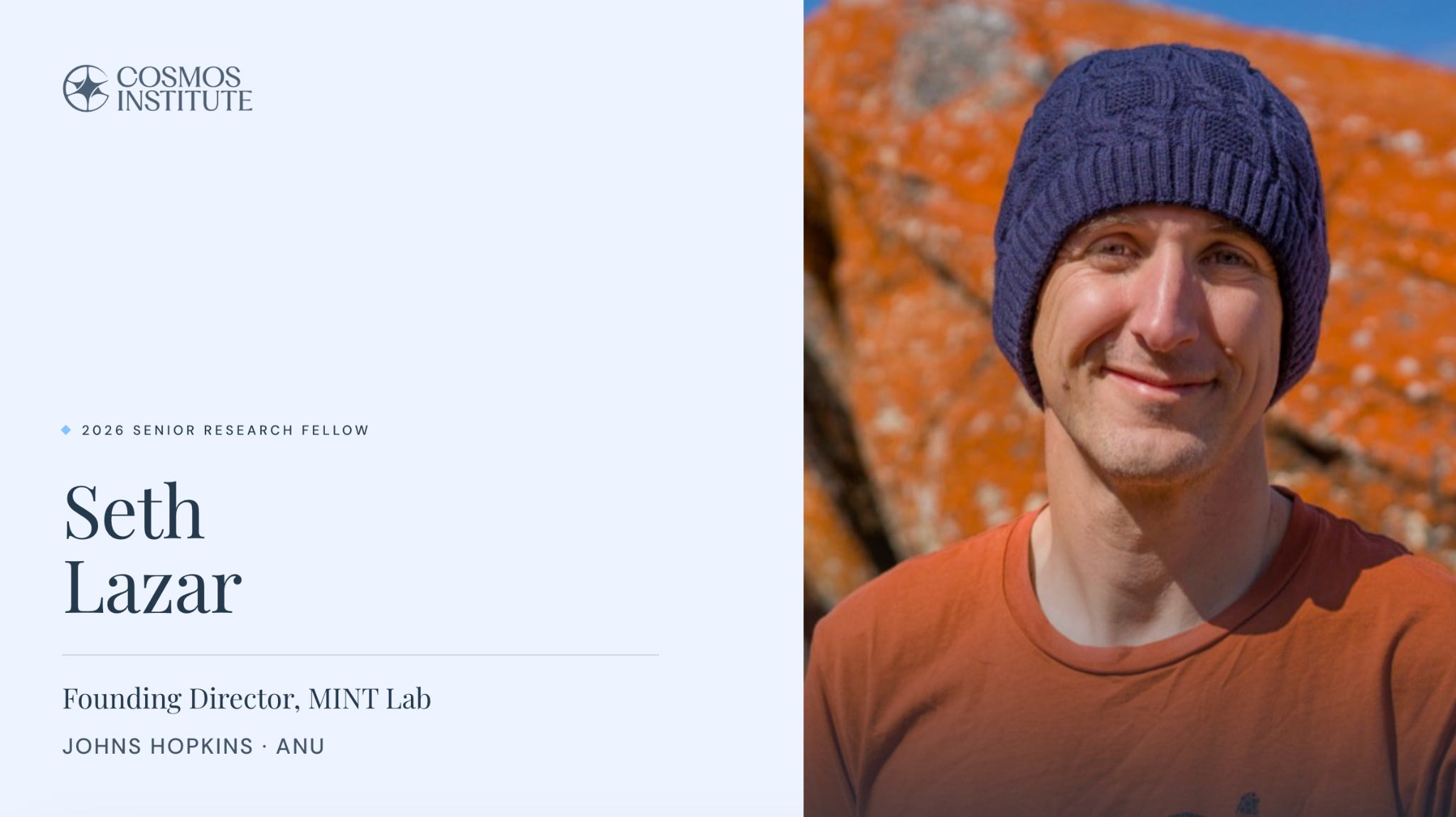
Seth Lazar’s research focuses on the moral and political philosophy of AI and computing, and on the reinvigoration and redesign of liberal democratic institutions for the AI transition. He has published widely in top philosophy journals and computer science conferences, and is an editor of Oxford Studies in Philosophy of AI and Computing, and the Alignment Journal. He is a Professor in the School of Government and Policy at Johns Hopkins University, a Professor of Philosophy at ANU, a non-resident fellow at the Carnegie Endowment for International Peace, and a Distinguished Research Fellow of the University of Oxford’s Institute for Ethics in AI.
Houda Nait el Barj, Experience Research Lead, OpenAI
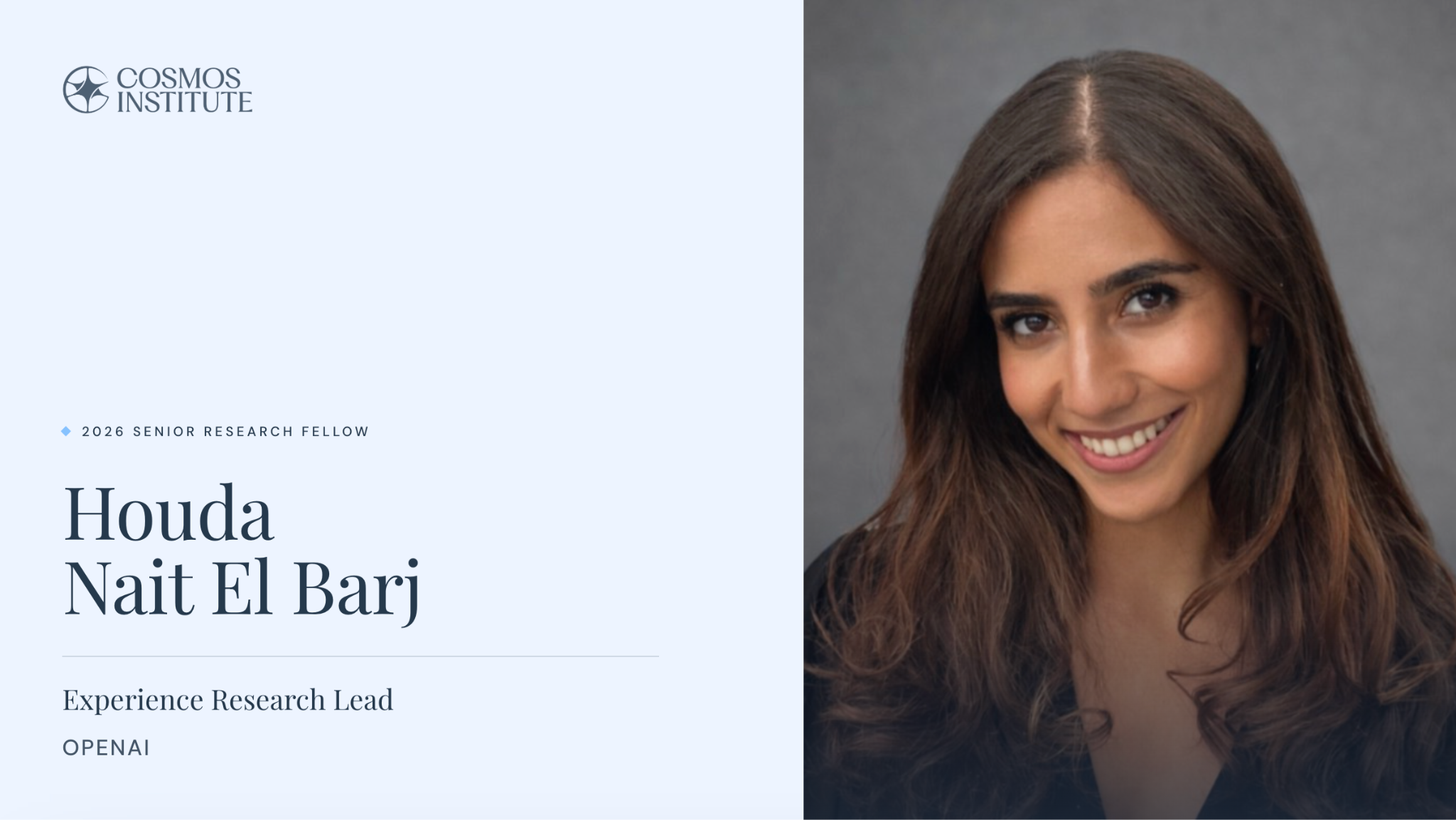
Houda Nait El Barj is a research lead at OpenAI working at the intersection of multimodal AI, human-computer interaction, and continuous learning. Her work focuses on building intelligent systems that can adapt alongside people over time, supporting their goals in ways that are safe, personalized, and aligned with human agency. Originally from Morocco, Houda is passionate about designing technology that expands human potential and helps bring more beauty, meaning, and long-term flourishing into the world.
Matthew Botvinick, Member of Technical Staff, Anthropic
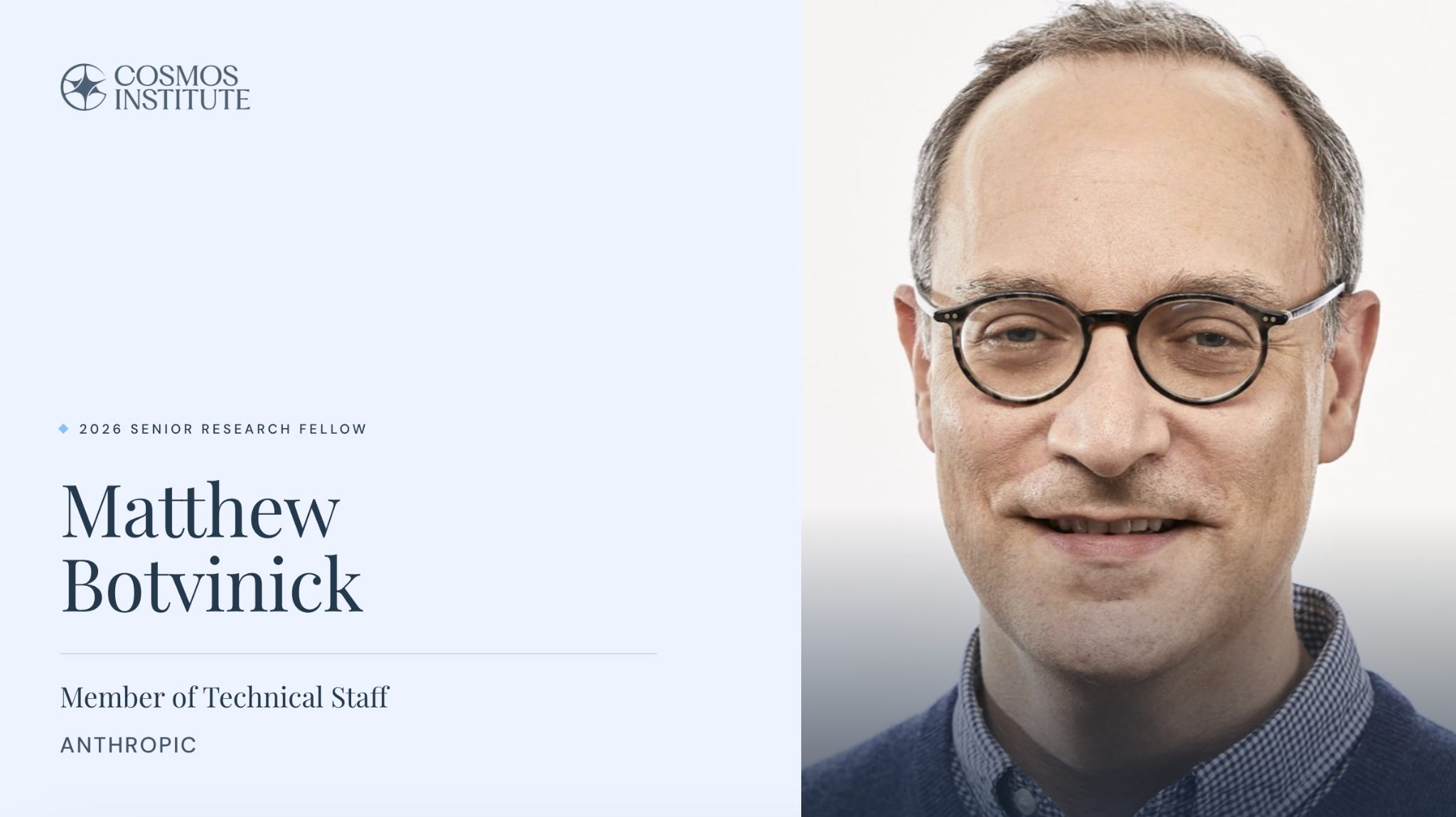
Matthew Botvinick is a member of the technical staff at Anthropic, leading work on AI and the rule of law; a senior fellow at Yale Law School; and an honorary professor at the Gatsby Computational Neuroscience Unit at University College London. In previous work, Botvinick served as senior director of AI research and senior technical and policy advisor at Google DeepMind, and led the Neural Computation Lab at Princeton University and the University of Pennsylvania. Botvinick holds an M.D.from Cornell University, a Ph.D in deep learning and cognitive science from Carnegie Mellon University, a J.D. from Yale Law School, and an M.A. in Art History from Columbia University.
Julia Haas, Staff Research Scientist, Google DeepMind
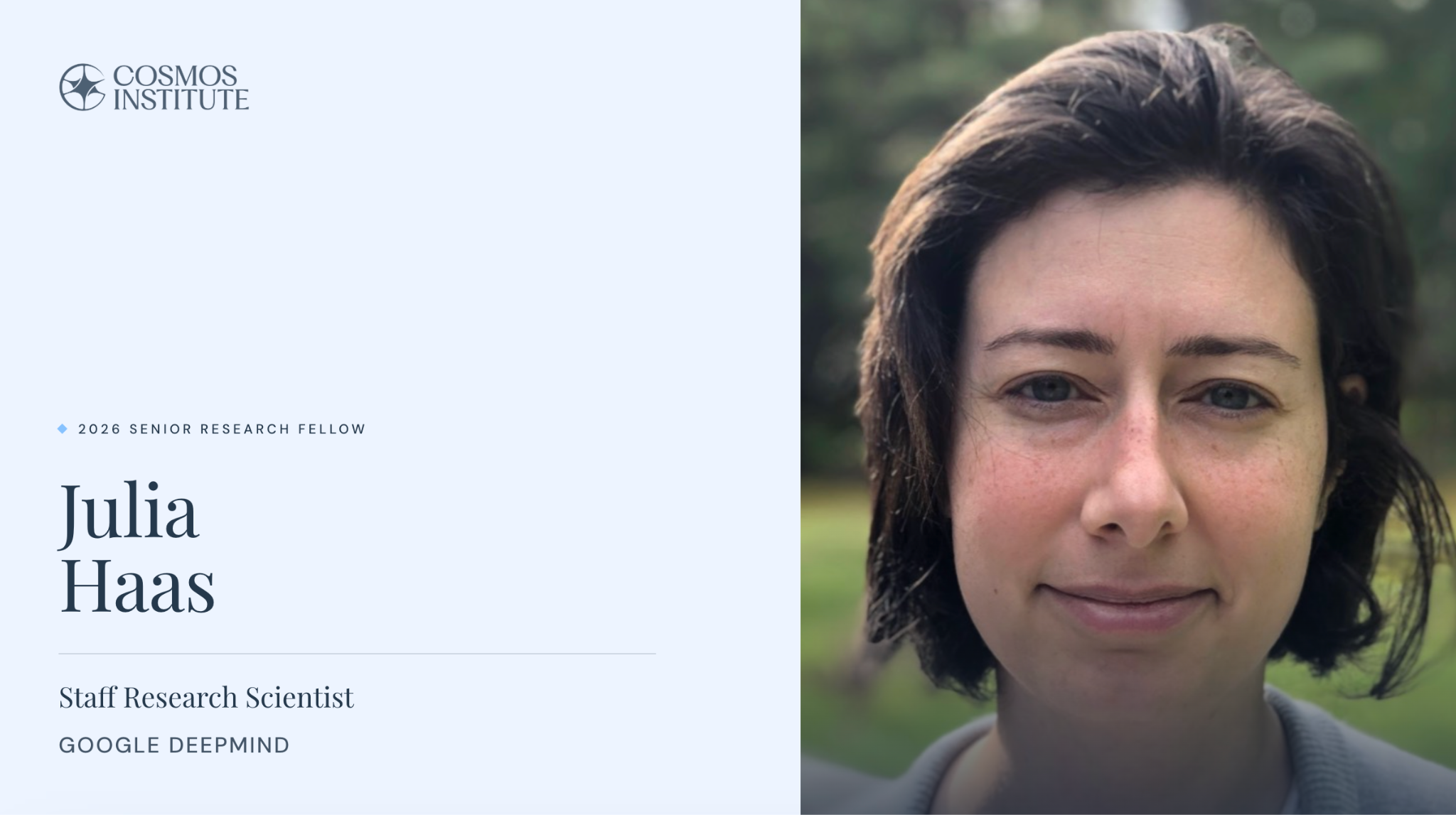
Julia Haas is a Staff Research Scientist in the Responsibility Unit at Google DeepMind. Her research is focused on philosophy and cognitive science, and she works on the nature of valuation and its role in theories of the mind, especially in normative cognition. Her work also includes investigating the possibility of meaningfully moral artificial intelligence, and has introduced the concept of the “Evaluative Mind” proposing that beneath our thinking and reasoning lies a continual and automatic appraisal of the world that shapes our faculties.
Harvey Lederman, Professor of Philosophy, UT Austin
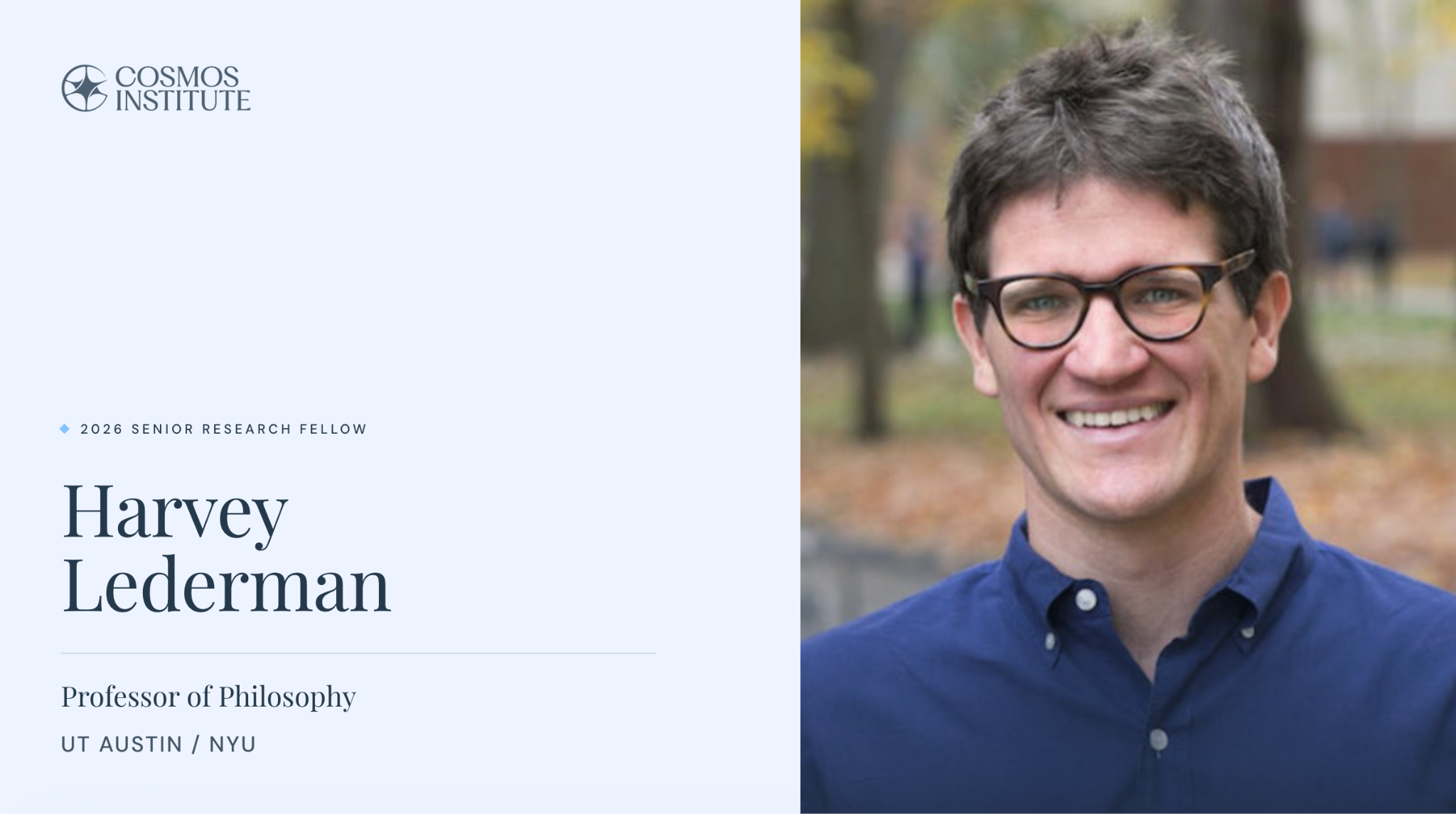
Harvey Lederman is a philosopher with broad interests in contemporary philosophy and in the history of philosophy. After earning his DPhil (PhD) at Oxford, he taught at Pittsburgh, and then Princeton, where he was promoted to full professor in 2022. Since 2023, Harvey has been professor of philosophy and the Jacob and Frances Sanger Mossiker Chair of the Humanities at UT Austin. In 2026-7 he will be a Visiting Professor at NYU. His current work is divided between the foundations of game and decision theory, the philosophy of AI, and the history of Chinese neo-Confucianism.
Ben Bariach, Sr Director, Frontier Safety and Alignment, Microsoft Superintelligence
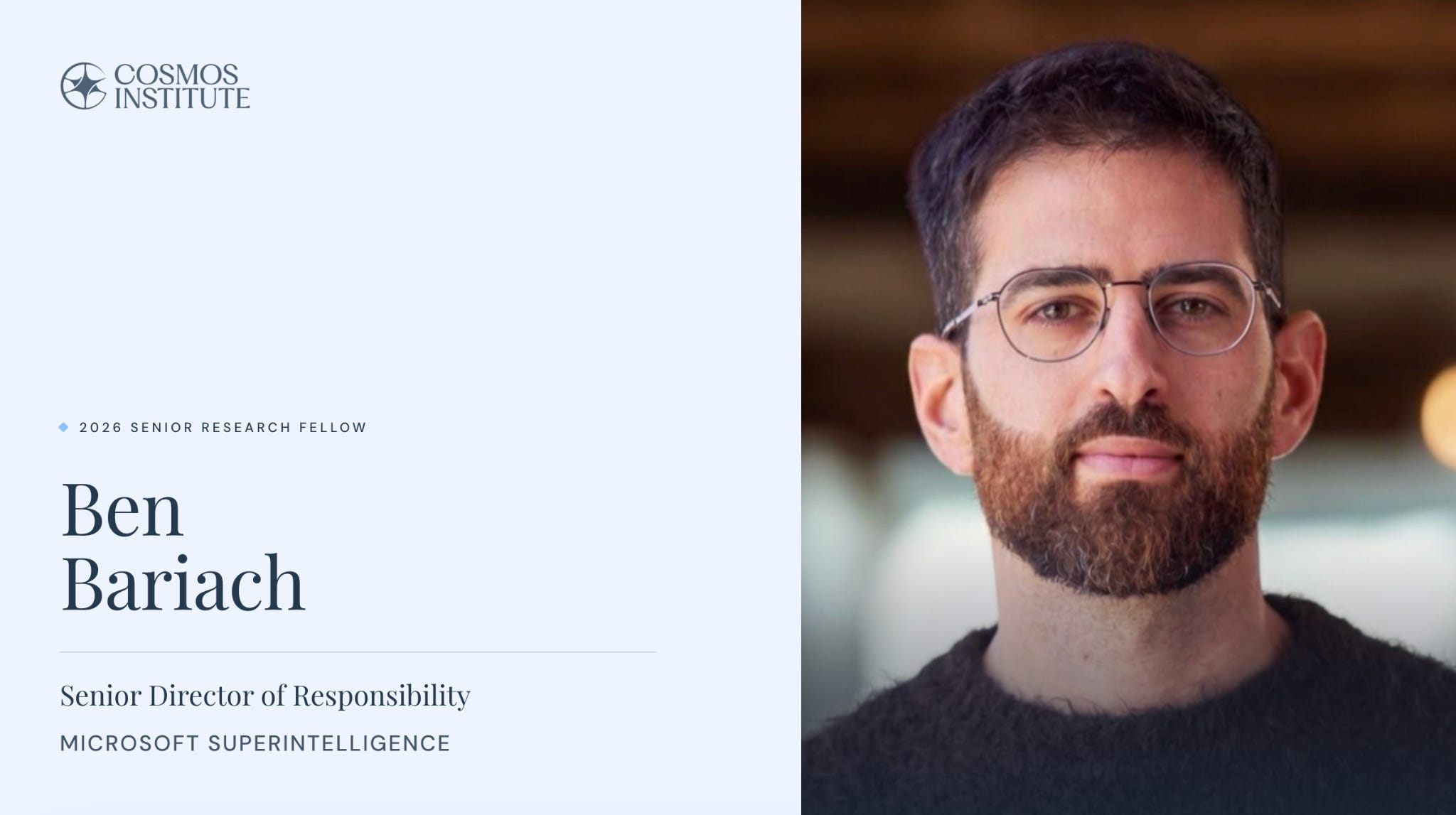
Ben Bariach is a researcher in the philosophy and governance of AI at the University of Oxford. In his professional capacity, he leads work on frontier AI safety and societal impact, currently at Microsoft Superintelligence and previously at Google DeepMind, where he has helped build world-leading AI models that are human-centered and safe. His research interests center on superintelligence preparedness, including the implicit philosophies underpinning AI development, agentic AI embodiment and autonomy boundaries, and the perception of machine minds. Ben has published widely across both technical and humanities venues, with work spanning frontier model development, evaluation, safety, and ethics.
Andrew Hall, Founder, Free Systems Lab
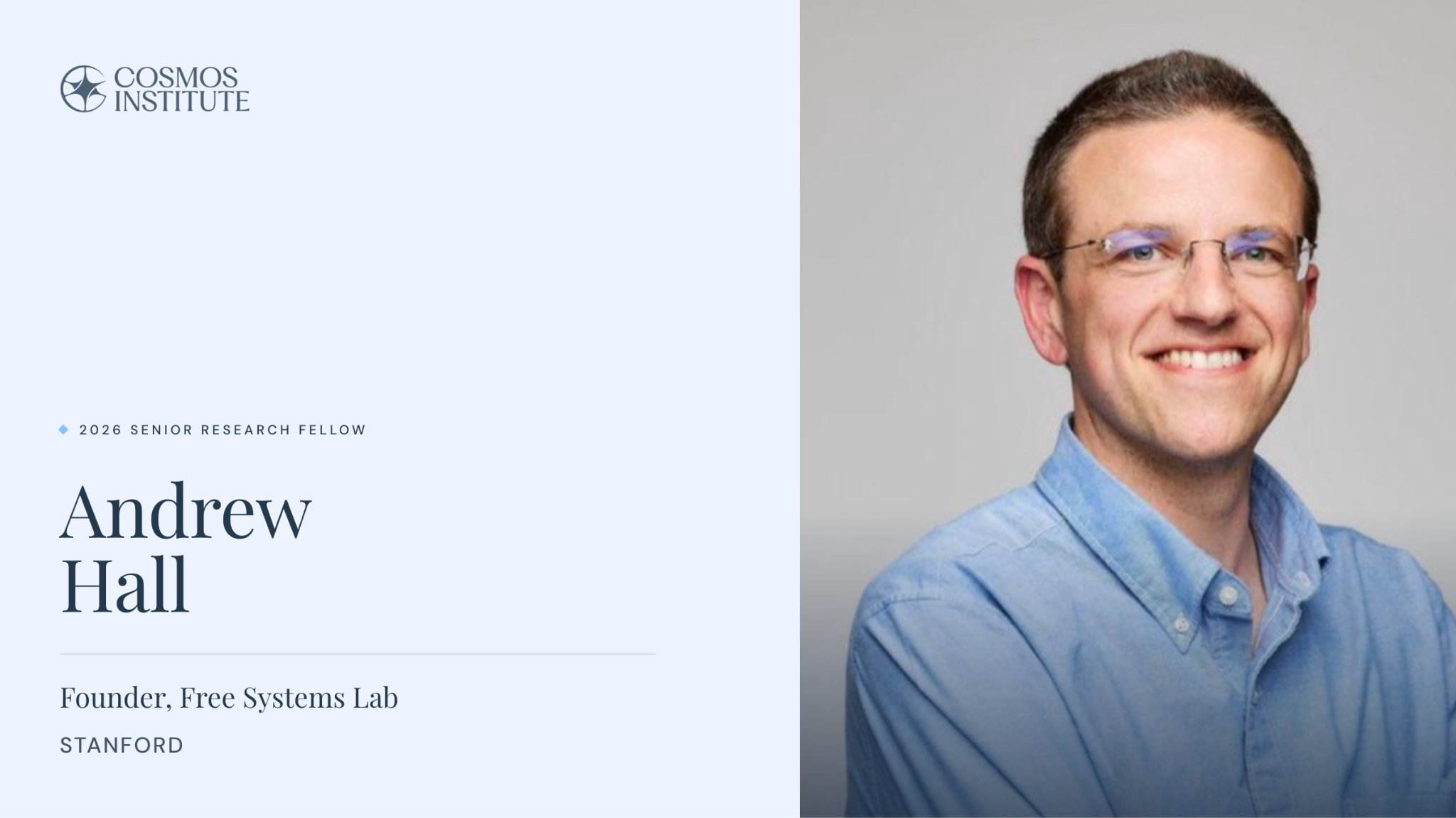
Professor Andrew Hall is the Davies Family Professor of Political Economy at the Stanford Graduate School of Business and a Senior Fellow at the Hoover Institution. He leads the Free Systems Lab, which measures whether AI systems can be trusted with power. The Lab is housed across the Hoover Institution and Stanford GSB - studying how AI systems shape political information and behavior, how they can be governed, and how AI itself can be used to design and test better systems of governance. Free Systems has produced work on model training, platform policy, and constitutional design - including the Dictatorship Eval, a benchmark measuring large language model responses to authoritarian requests, cited by Anthropic in its frontier model evaluations. Andrew also advises the a16z crypto research team on decentralized governance and is an advisor to Forum AI. Previously he spent eight years advising Meta on governance and strategic issues.
Cosmos Institute is the Academy for Philosopher-Builders, technologists building AI for human flourishing. We run fellowships, fund AI prototypes, and host seminars with institutions like Oxford, Aspen Institute, and Liberty Fund.
Great group, I look forward to hearing more and possibly contributing. (Cc: Seb Krier, Seth Lazar.)
My current working outline for my work in progress: https://docs.google.com/document/d/19XkqIffKk_XWCtdqlccoL5TQmGeR5cA_SY4YtqO5pVo/
I wish the new research team success in it's work and all the best.