

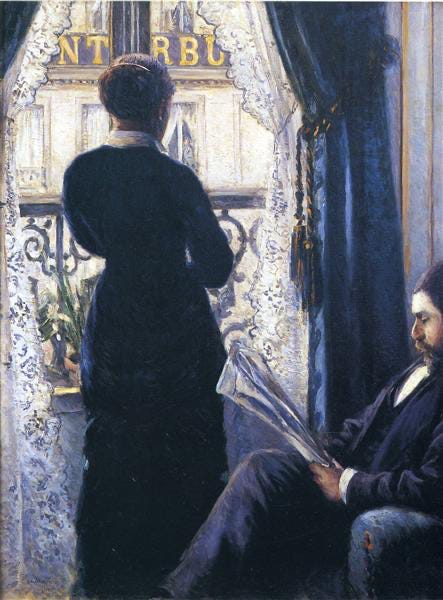
Freedom, for most of the people who ever lost it, was taken by a soldier at the door, a wall you would be shot for climbing, or an official whose stamp decided whether you could pass.
This is the danger the liberal tradition feared. It fought revolutions to throw it off and wrote constitutions that bound power to prevent it from arising.
Alexis de Tocqueville did not fear the return of the tyrant. Instead, he feared that we would be small. There need not be a tyrant to break our will – we would be so comfortable that we would no longer have a will to break.
Tocqueville wrote at the seam between the aristocratic and the democratic worlds. He did not mourn the demise of the old one. The grandeur of aristocracy had been built on the backs of others and its fall was providential. But he loved the new world enough to warn it that the same condition that produces the striving, self-reliant citizen could produce the anxious subject who wants to be relieved of the burden of self-rule.
His warning is particularly acute today. We have built a tool that can make the first move for us, and when it does, it feels like second nature. It has read almost everything that we have ever written, can pose questions, and draft the answers. A tool that can do this for you can just as easily do it instead of you – thinking on your behalf before you have the chance to think for yourself.
The small-souled man
In the aristocratic era, everyone had bonds of obligation, to those above and below them. Under conditions of equality, no one owes anything to anyone. As a result, they turn inwards, towards a small circle of families and friends. Tocqueville called this individualism. He didn’t mean this as a compliment. He wasn’t talking about an artist’s individuality or the pioneer’s self-reliance. Instead, he meant individuals retreating into a private sphere where they no longer saw the need to expend effort on strangers.
But this individualism doesn’t produce peace. Instead, man without a purpose would be restless and suffer from inquiétude - anxiety without an object. As the goods of this world, as his time on it, are finite, but his appetite for them is not. So, he is left permanently reaching for more – always outwards, but never upwards. In the middle of this plenty, man feels a lack. Tocqueville saw this among the Americans he met, who were “serious and almost sad even when they were enjoying themselves.”
Amid this anxiety, a new power promises to take the burden of living off his hands. While he would have rebelled against a feudal lord, this power sits above everyone equally. Submitting costs him his freedom, but not his equality. This was Tocqueville’s great insight about democratic man: he loves equality more than freedom.
What democratic man really wants is an end to friction. When we truly govern ourselves, there is always a small resistance between us wanting something and having it. Instead of mob justice, the jury must deliberate before a man is punished. Instead of ruling by decree, there must first be a debate. Tocqueville called this resistance a “form.”
To the democratic eye, the form seems like an unnecessary delay, even an insult. But Tocqueville realized that the form was the pause needed for the exercise of will. Removing it may seem convenient, but the forms were the freedom.
The man who wants his ends met the instant they arise never asks whether they are worth wanting. And when asked to attempt something great, he doesn’t know where to begin.
Two fears, one machine
Tocqueville feared this descent, but in his own time, he only saw the early warning signs. With AI, we potentially have a technology that could run the same descent in a fraction of the time. Unlike the tendency of the age that Tocqueville identified, this could happen both at a societal and a hyperpersonalized level.
In Democracy in America, Tocqueville wrote about two related fears.
The first is the soft despotism we’ve been tracing: the tutelary power that lifts the business of living off your hands one task at a time.
The second, he called the tyranny of the majority. By this, he meant far more than simply majorities wielding their electoral power. Instead, he meant a culture of conformity that leads individuals to self-censor. Finding nowhere to land, dissent dies and we gradually surrender the power of independent thought.
In Tocqueville’s time, the two stayed separate – public opinion influenced your thoughts, while the state governed your affairs. There was space between the two of them for a man to stand. AI, however, offers a fusion: power over what you do and power over what you think. Unlike political power, this is delivered in private, through one helpful interface, one person at a time. And unlike the old feudal master, it wears your own face.
To see how this works, let’s imagine how a person could use AI today. We’ll call this person Elena, a journalist in her mid-thirties, though it could just as well be you or me. Her job involves weighing up competing claims and reading huge quantities of written material. It demands the patience to develop her own angle and to tell readers something that they might otherwise not realize.
Elena begins using an AI assistant. At first, it’s just to summarize meandering documents or to sharpen some of the questions that she’s scribbled down in the moments before an interview. It’s just like having a good intern, she tells herself. But gradually, the help moves upstream. She goes from using the tool occasionally, to using it by default. The assistant learns her beat and her writing style, and she’s turning in stories quicker than ever. Her editor is delighted.
But the journalist who once prided herself on going off piste now sticks to a well-trodden track she did not find and cannot see. The information she sees is being filtered through a progressively narrower aperture. And every rival on her beat is asking the same oracle, which gives each of them the same consensus opinion. Tocqueville’s majority surrounded us with agreement. This one goes first. So the story that would have broken the agreement is never written.
Elena has never felt more like she’s thinking for herself.
The wrong questions
So what do we do? The instinct of many people is to treat this as a problem of power. It’s to focus on who owns the model, controls the compute, the power wielded by the labs, and how we should regulate them. These are real questions, but they belong to Montesquieu.
Montesquieu and Tocqueville lived a century apart, but their lives rhymed. They were both provincial noblemen and men of the law; Montesquieu served in the parlement of Bordeaux, while Tocqueville was a magistrate at Versailles. Both crossed the sea to study freedom where it was working – Montesquieu the Channel and Tocqueville the Atlantic – and came back to write the great liberal book of his century.
Montesquieu taught us to fear power that concentrates in one place. So his solution, which underpins constitutions all around the world to this day, was to divide it, set it against itself, and build in checks and balances. Montesquieu wrote as an aristocrat trying to defend the parlements and other intermediary bodies against a centralizing monarchy.
By Tocqueville’s day, the Revolution had already swept this institutional layer away, sending his great-grandfather to the guillotine in the process. Under the circumstances, it would have been understandable if, like many in his social circle, he had become a reactionary who yearned for the restoration of a lost world. Instead, he went looking for freedom where it still lived and found it in practice: in the township, the jury, and the association.
The power Tocqueville feared couldn’t be held at bay with clever constitutional mechanisms. Soft despotism doesn’t gather in one place – there’s nothing for the separation of powers to separate. This is why, instead of dividing power like Montesquieu, Tocqueville’s instinct was to spread it.
Another response might be to legislate. But Tocqueville feared the fine, soft administrative net that settles over a people for its own good, leaving it a flock of timid animals with the state for its shepherd. Instead, he looked beneath the law to mores. These are the habits of heart or mind that decide if the law means something. If a people have lost the habit of self-government, no statute can restore it. If people have retained it, they don’t need the statute.
Autonomy and greatness
We face a condition no people has faced before: a tool that acts not on the world but on the will itself. Such a tool endangers things that a tyrant never could.
The first thing it risks is autonomy: the cultivated capacity to author your own reasoning. This means framing the question, weighing what matters, and then owning your judgment. This is not the same thing as agency. Agency is about getting things done. Like Elena, you can simultaneously be highly agentic, but devoid of all autonomy.
The second loss is older and grander. Tocqueville feared that equality would cost us the potential for greatness. He arrived in America, half-afraid that the democratic age had extinguished thumos – what the Greeks called the part of the soul that loves honor, contest, and daring.
Tocqueville, however, found it on the merchant ship. At the end of volume I in Democracy in America, he tries to solve the mystery of how American merchants were able to offer cheaper rates and dominate transatlantic shipping. He finds the answer in temperament.
The American leaves Boston to buy tea in China, is gone two years and touches land once, lives off brackish water and salt meat, runs into the storm under full sail and mends the ship as he goes. He does all this to sell a pound of tea for a penny less than the Englishman. He does this because, as Tocqueville writes, the Americans put a kind of heroism in their manner of trading. The old fire does not die in a democratic age, it changes address.
Autonomy and greatness can look like rival values, and the people who prize one might be embarrassed by the other. Autonomy can sound liberal and procedural, while greatness can sound dated and aristocratic. In fact, they are the same capacity at two altitudes.
Greatness, once we strip it of its grandeur, is autonomy exercised to its fullest. It’s being willing to go first when nothing has been prepared for you, to attempt something that has no script. Autonomy is the same capacity, just exercised in our ordinary judgments. Every private, the saying goes, carries a marshal’s baton in his knapsack. So when you surrender your autonomy to the machine, you also surrender your greatness.
One obvious objection is that if we’re complaining about the machine moving first and forming our judgment, we could say the same thing about a good teacher, a parent, or a tradition. After all, we’re currently analyzing AI using the words of a man who died a century and a half ago. Is every teacher a tyrant in the making?
The difference lies in what this first move is for. A good teacher sets you questions in order to prepare you for the day when you set your own. You take what you inherit from a teacher or a living tradition and refashion it. By contrast, a tutelary power is content to be needed forever. The same is true of a philosopher-king, however wise or gentle. His aim is to keep you well, not make you able, and a power like that, Tocqueville said, keeps us in perpetual childhood.
The philosopher-builder
Instead of looking to a philosopher-king or a new regulation, the best lever lies upstream, in the tools themselves. A tool that we use every day in work that matters is part of what forms you. It helps set the questions you practice answering and in turn shapes your habits of mind. It’s where capacity is either grown or starved.
The full impact of these tools is not obvious yet, because the people who use them best still bring a training in reading, argument, and judgment formed before the tools’ arrival. A secular age can run for a long time on the moral capital of the faith it has abandoned; we are now running on capacity built in a world before highly capable AI. When that inheritance is spent, it’s not clear what will be left underneath.
The remedy is to return resistance at the point where it can strengthen the user. This is the task of the philosopher-builder. For Tocqueville, freedom was not a possession you were handed but a craft learned by doing, the way the township taught a free people to govern itself in small things until self-government became second nature. So the builder makes tools that leave you more capable than they found you.
The builder can provide a tool that protects your ability to make your own choices, but it can’t tell you what your life should be for. No builder can tell you what is worth embracing greatness to achieve.
Looking upwards
On my first day at MIT, I walked into Killian Court. I was confronted by limestone and a dome that belonged in the Pantheon. Along the frieze above the columns, you read the names Aristotle, Newton, and Darwin. The court is built so that to read them all, you must lift your head. Undergraduates, deans, and presidents come and go, but this place outlasts them all.
This reverence is the one form of looking upwards that a democracy allows. It stands above you, without standing on you.
I have felt it since in the room at All Souls where Isaiah Berlin thought, or at the Lyceum in Athens, where Aristotle taught; I once spoke in the hall beside its ruins, and found it hard to begin. I’ve even felt it on a nuclear submarine, where we kept religiously to a standard set by Admiral Rickover, who died years before our boat was launched. No one would have dreamed of lowering it.
These places are never the work of a single pair of hands or lifetime: a hundred years to the day after Gaudi died, Barcelona lit the great central tower of the Sagrada Familia.
A place like that asks two things of you: that you remake it and that you revere it, looking up to a standard you did not set. To remake without reverence is vandalism, but to revere without remaking is servility.
This is the biggest threat the machine poses. It takes the library, the laboratory, and the debating chamber and dissolves them into a weightless answer. It dissolves the place where a standard can live.
Tocqueville thought the leveling of the world was fated. You can read Tocqueville’s canon from start to finish and you won’t find a Tocquevillian manifesto or a policy program. Instead, Tocqueville believed that whether this equal world would become a school for the free man or a comfort blanket for the small one was down to us.
The freedom we have been guarding was never only the freedom to be left alone. It was the freedom to go first and to be great. The machine can generate every word Tocqueville wrote on demand, but it cannot give us the room in which he wrote them. That is what we have to build: tools that hand us back the first move, and rooms that someone, a hundred years from now, will stand inside and know that something happened there.
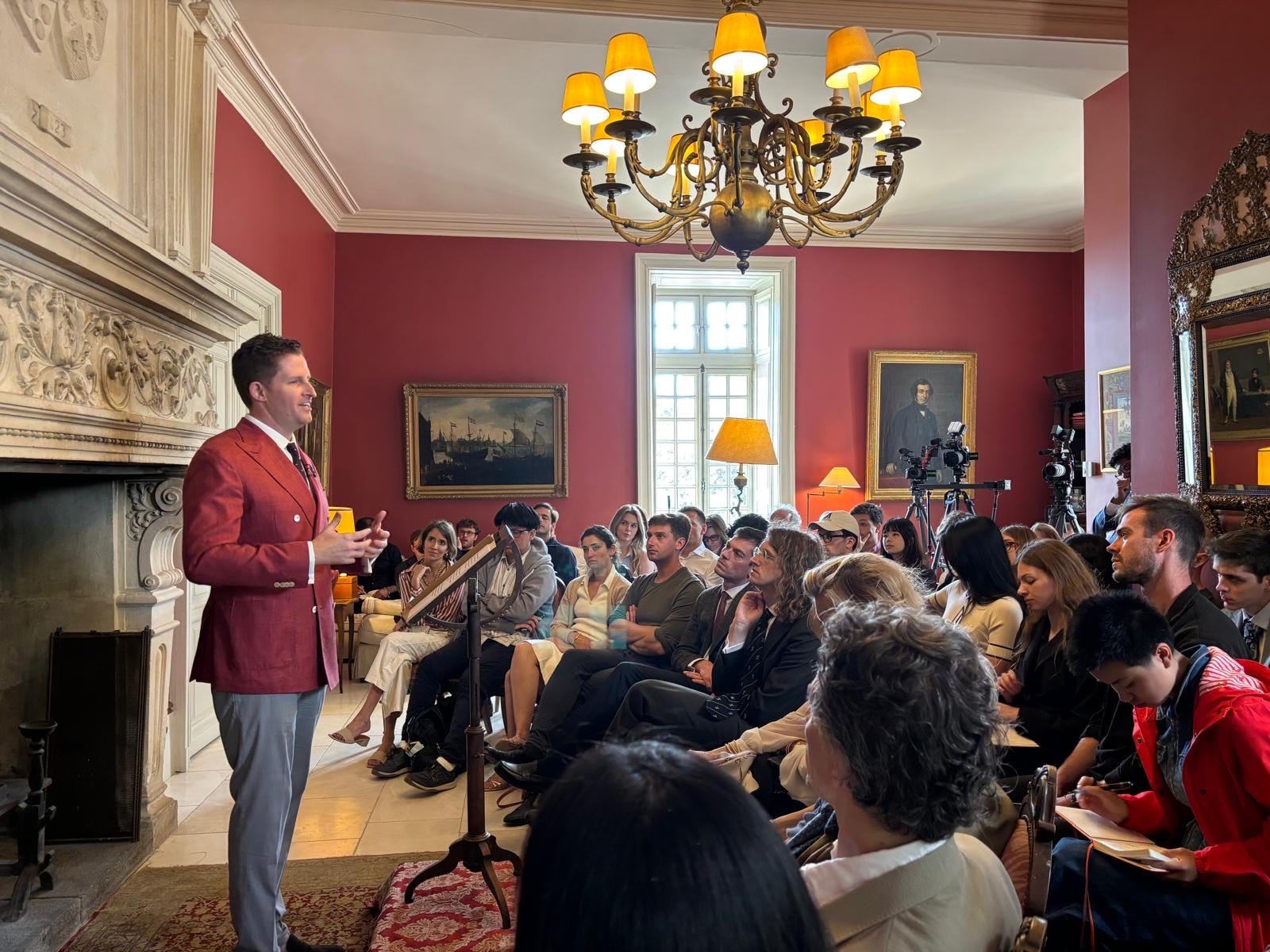
Cosmos Institute is the Academy for Philosopher-Builders, technologists building AI for human flourishing. We run fellowships, fund AI prototypes, and host seminars with institutions like Oxford, Aspen Institute, and Liberty Fund.
Your piece arrived just as I was reading this passage in Chapter one, where Tocqueville indicates that he will not be engaging with some groups as individuals: "Their implacable prejudices, their uncontrolled passions, their vices, and still more perhaps their savage virtues, consigned them to inevitable destruction. The ruin of these nations began from the day when Europeans landed on their shores; it has proceeded ever since, and we are now witnessing the completion of it. They seem to have been placed by Providence amidst the riches of the New World to enjoy them for a season, and then surrender them" (Chapter 1)
It is interesting to me that elite American education focuses more on Achilles, Hector, and Odysseus than on Pontiac, Tecumseh, and Metacomet. The reasons why are obvious, of course. The most difficult of difficult conversations would have to occur. If anyone could see their way toward teaching the truth of the parts of our founding story that don't have a "good" ending (like emancipation and abolition), I think you could, Brendan, given your warrior background and experience. It uplifts us to face that past and I have found that AI helps a great deal -- it isn't squeamish and there are documents aplenty to be drawn upon.
Brendan, on this idea: "The remedy is to return resistance at the point where it can strengthen the user. This is the task of the philosopher-builder." >
Do you see OpenAI/Anthro/Google taking this seriously in product design? E.g., introducing an intentional "cognitive friction" toggle that forces the user to do more of the heavy lifting?
Today, it's possible of course with system prompts etc. but exposing it or turning up its temperature cuts against the quintessentially American growth engine: user convenience.